The Subtle Weight of Bias: How Workplace Prejudice Shapes Careers
Workplace prejudice can take many forms that may or may not be obvious. Nonetheless, it is still harmful to the employees and the company itself! This article will discuss some of the different types of workplace prejudice and talk about how it affects the people in the community.
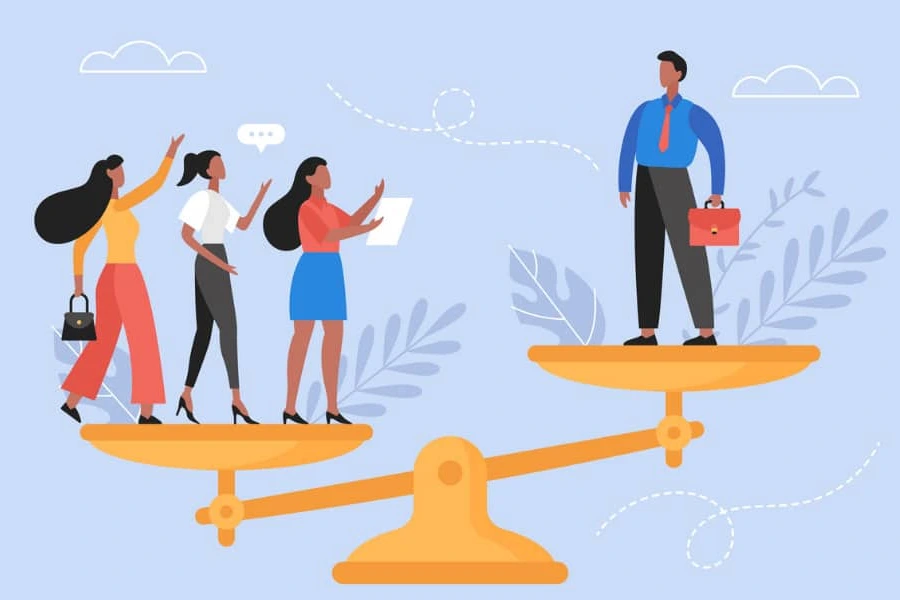
Overt discrimination is one type of workplace prejudice, and it includes unequal pay or not being able to get promotions. Studies show that most of these targets are women and minority groups. It is characterized by actions such as refusing to hire certain people due to their gender or race, harassing people verbally, or being blatantly rude to certain people. Examples of this happening could be an employer refusing to hire a woman for a position just because that person is a woman.
Another example of workplace prejudice is bias, which can significantly shape an individual’s career path, influencing every stage from hiring to long-term issues in the community. It can appear during hiring through biased interview questions or assumptions, and may continue as certain workers are overlooked for promotions due to different stereotypes. In the workplace, bias may limit access to certain things, such as promotions, being able to ask for help, and, over time, these experiences can lead to lowered confidence, dissatisfaction, and higher turnover rates, which only reinforces inequality in professional settings.
There are many different types of bias, such as bias based on race, gender, age, or disabilities, which is more obvious, and a subtler type of bias is macroaggressions. Bias based on gender could give a leadership opportunity to a male, not a female, because of bias against gender. An example of age bias can be not giving newer technology to older members of the company, or preferring younger employees over older ones, regardless of their capabilities.
Workplace prejudice doesn’t just harm individuals it carries hidden costs for organizations. When bias goes unchecked, employees’ energy and productivity tend to decline, as workers feel undervalued or excluded from the workplace. This often leads to higher turnover rates and increased recruitment expenses as companies struggle to retain talent. Additionally, a lack of diverse perspectives limits creativity during projects or meetings, causing organizations to miss opportunities for growth and improvement in their company. In the long run, having equity and inclusion isn’t just good for the employees and the work environment; it’s essential for organizational success.
Overcoming workplace prejudice requires effort from both employers and employees. Employers can take steps by enforcing blind recruitment processes, offering regular bias-awareness and diversity training, and ensuring that the promotion criteria is transparent and fair. Employees, on the other hand, can protect themselves by documenting incidents of prejudice and communicating with others to be heard. Together, these actions create an environment where fairness and inclusion are more normalized, and certain people aren’t left out.
Subtle bias may seem minor or unintentional, but its impact is far very noticeable over time and affects everybody. Over time, the everyday jabs and unequal opportunities quietly affect people’s confidence, limit growth, and derail careers. Recognizing bias is only the first part of changing your environment, because progress requires action from both parties. Workplaces have to think and act beyond awareness and commit to accountability and ensure that fair treatment and inclusion are actively practiced, not just discussed. Employees can actively share their experiences with bias, raise awareness, and proactively communicate with their employers to make sure that the bias stops.
References
- 1. Acker, J. (2006). Inequality regimes: Gender, class, and race in organizations. Gender & Society, 20(4), 441–464.
- 2. Bertrand, M., & Mullainathan, S. (2004). Are Emily and Greg more employable than Lakisha and Jamal? A field experiment on labor market discrimination.
- 3. Bourdieu, P. (1986). The forms of capital. In J. Richardson (Ed.), Handbook of Theory and Research for the Sociology of Education (pp. 241–258). Greenwood.
- 4. DiTomaso, N. (2015). The American Non-Dilemma: Racial Inequality Without Racism. Russell Sage Foundation.
- 5. Eagly, A. H., & Karau, S. J. (2002). Role congruity theory of prejudice toward female leaders. Psychological Review, 109(3), 573–598.