The Influence of ChatGPT on Writing to Students
Writing has always been a bog. I think it’s safe to say that no writer in history - notwithstanding their aptitude - has accomplished the great feat of churning out words with no difficulty. Most people treat writing as a battle as if they have to navigate through a jungle of complex syntax and words everytime they hold a pen or a keyboard.
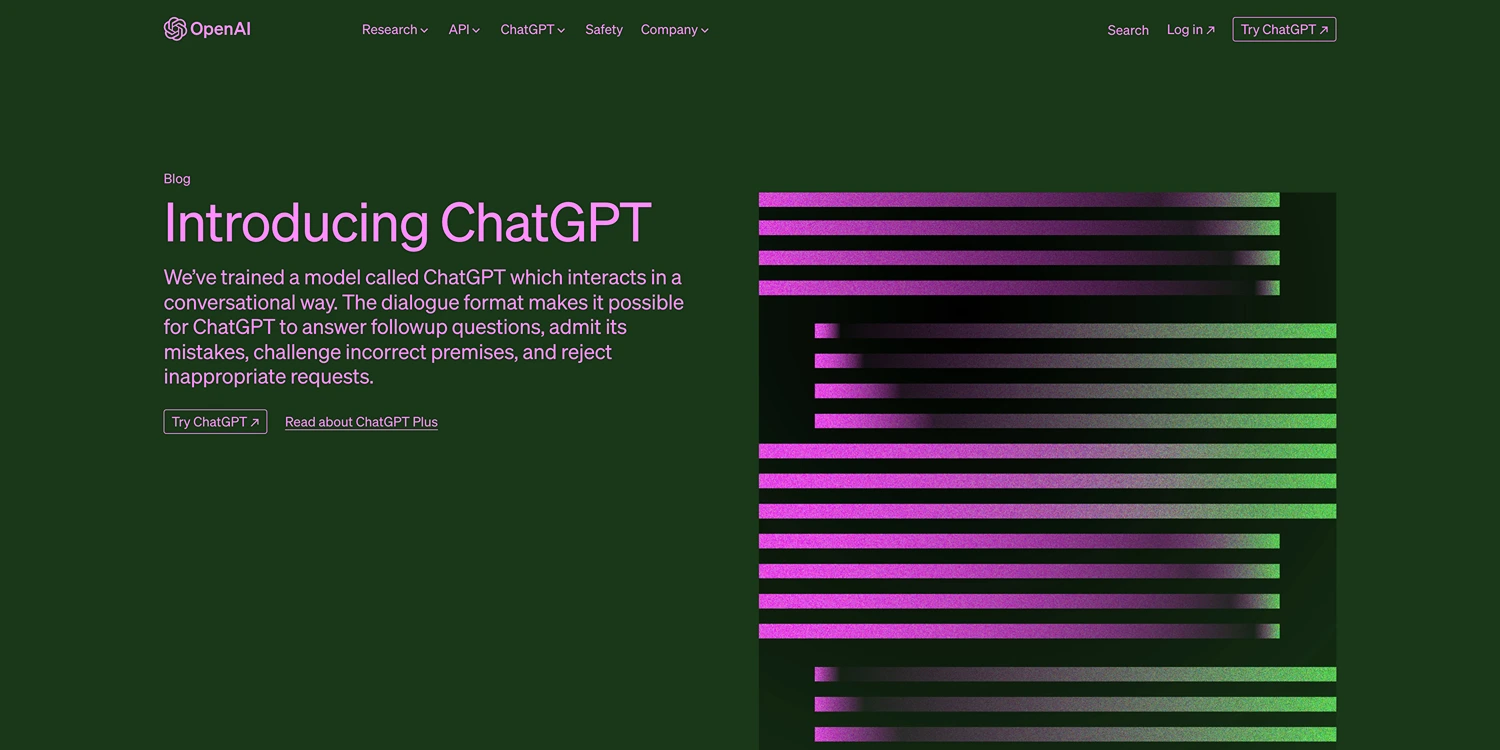
However, the longstanding war between lazy students and 1000 word essays might have changed overnight on November 30, 2022 when OpenAI released the almighty ChatGPT, an academic equivalent to a genie that can grant users’ wishes.
It seems as though this AI tool can produce work that is usually better than the average Joe when given the right prompts. Now, people can simply enter in a few words and press the enter button to get the work that they previously had to struggle three hours to get.
Another merit of ChatGPT is its incredible flexibility with which it produces the works. This remarkable tool can imitate the tongue of a 10 year old or inject a certain atmosphere into its writing depending on the user’s prompt.
What does this say about writing?
Amidst this remarkable change, people are now questioning - and rightly so - whether we are now witnessing the end of the writing era. As with the advent of other AI tools in other disciplines, people are shifting their gaze towards professionals (writers) who - to the public’s eye - just lost their job.
Nonetheless, that doesn’t seem to be the case if we take a closer look. Although, it is needless to say that ChatGPT has marveled many with its abilities, most people argue that it has not reached the level of sophistication that society deems competent (I guess we don’t have to worry about an apocalypse just yet). Some professors allegedly allow undergraduates to use ChatGPT with the caveat that they will likely be receiving “a C+” on their paper due to its poor quality.
This begs the question: what makes human writing (from proficient writers) better than ChatGPT? Isn’t ChatGPT a so-called savage that has access to a rich repository of information and words?
According to the article “What AI Teaches Us About Good Writing,” these intelligent AI tools lack the ability to form intimate relationships with readers. This very characteristic might be why ChatGPT is useful when it comes to standardized assessments for which the audience is general and ambiguous. Good writing is like an interesting conversation between the author and the reader, and ChatGPT is just an impolite conversationalist who doesn’t care about whether its respondent cares about what it has to say. It is simply too indifferent and flat to create the “ineffable spark” people feel when they see good prose. Right now, the AI tool mostly achieves the same effect as a circus dog that amuses people with tricks that surpasses many people’s expectations (“Oh, I didn’t know it could do that”).
The possible repercussions of AI writing tools. What does the future look like?
ChatGPT sheds light on some of the questions humanity will have to quickly answer in the near future (or now). Is it unethical to use AI tools? To what extent should we punish people who plagiarize ChatGPT?
Since ChatGPT basically marinades itself in the vast data available online, you might be inadvertently plagiarizing a lot of people when you plagiarize ChatGPT. Most teachers and professors (and anyone for that matter) consider plagiarism a serious crime, for they equate it with stealing the “thoughts” of other people.
Surely, ChatGPT has its upsides. Writing is inevitable in modern society, and people can save a lot of time and brain-power by using AI tools. This can enable people to allocate their time and resources in developing other skills that are important for the advancement of society.
However, as one who loves writing, I have to admit that the advent of AI tools does not put a smile on my face; the world would certainly look different if AI-generated writing proliferates on the internet. However, I don’t necessarily think that organic writing would completely lose its value in the future. Just as we still watch marathons even though one can clearly use automobiles to outrun “human” runners, we can still enjoy the competition of humans and value their accomplishments (while using technologies to make life more convenient).