The Age of Echo Chambers: Social Media and the Rise of Misinformation
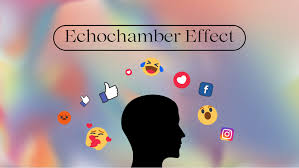
Social media has transformed how people connect, communicate, and consume information. In just over a decade, it has become the world’s largest public forum a space where news breaks before it reaches television, where opinions travel faster than facts, and where communities form and dissolve in an instant. Yet this digital revolution has also given rise to a quieter, more dangerous phenomenon: the echo chamber.
Echo chambers are online environments where individuals are primarily exposed to ideas and beliefs that mirror their own, while differing opinions are filtered out or dismissed. These digital silos may seem harmless at first even comforting but they shape how societies think, vote, and behave. They amplify misinformation, deepen political and cultural divides, and erode shared understanding. Scholars from psychology, communication, and political science all agree that the problem stems not only from the algorithms that structure social media platforms but also from the cognitive habits of the people who use them.
The Psychology Behind Echo Chambers
Psychologists identify three forces that drive echo chambers: confirmation bias, selective exposure, and groupthink.
Confirmation bias is the tendency to seek information that supports one’s existing beliefs while ignoring evidence that challenges them. Selective exposure follows naturally people are more likely to follow, read, or watch sources that affirm their views, particularly when friends engage with similar content. Groupthink takes these tendencies further, as individuals conform to the dominant opinion within a group to maintain harmony, even when they privately disagree.
Over time, these patterns reinforce themselves. The more people interact with like-minded posts, the more social media algorithms deliver similar content, deepening their sense of certainty and belonging. Studies show that individuals who hold strong political views, distrust mainstream media, or spend significant time online are especially prone to such cycles. What begins as simple preference becomes an invisible wall separating users from differing perspectives.
Why Falsehoods Travel Faster Than Truth
The power of echo chambers lies in how they enable misinformation to thrive. An influential 2018 MIT study published in Science found that false news on Twitter spread faster, deeper, and more broadly than true news especially in politics. More strikingly, it was not automated bots but real users who propelled the spread. False stories tend to be novel, emotional, or sensational, triggering curiosity and outrage, two emotions that drive sharing.
This finding reveals a key truth: misinformation is not simply a technological problem but a human one. Platforms magnify the behaviors people already exhibit the impulse to share, to belong, and to feel informed. As Zollo and Quattrociocchi argue, the design of social media rewards engagement over accuracy, prioritizing what grabs attention rather than what fosters understanding. In such an environment, emotional narratives often outperform factual ones.
How Big Is the Problem?
The scale of the issue is staggering. According to the Pew Research Center’s 2024 News Fact Sheet, more than half of U.S. adults now get at least some of their news through social media. Facebook and YouTube remain dominant sources, but TikTok is rapidly gaining influence among younger users. Despite this reliance, a majority of users express concern about the reliability of information they encounter online.
Globally, the trend is similar. The Reuters Institute’s Digital News Report 2024 shows that social and video platforms are becoming central to how people access news even as concerns about misinformation and 'news avoidance' grow. Increasingly, users tune out from traditional journalism, perceiving it as biased or overwhelming, and instead turn to influencers and short-form videos that reinforce their worldview.
This dynamic is not unique to the United States. From Europe to Asia to Africa, the same feedback loops emerge: people cluster around ideological comfort zones, while nuanced or dissenting perspectives fade into the background.
Polarization and the Algorithmic Illusion
The link between echo chambers and political polarization is complex. A 2023 study in Nature by Andrew Guess and colleagues found that while Facebook users are indeed exposed to large amounts of like-minded content, reducing that exposure did not significantly lessen polarization in the short term. In other words, algorithms contribute to the echo chamber effect but are not the sole cause.
Human behavior, our networks, our trust levels, our emotional responses play an equally powerful role. People often choose to stay within ideological bubbles because these spaces offer certainty and identity. This insight underscores why purely technical fixes, such as altering algorithms or labeling misinformation, rarely change outcomes by themselves. As research demonstrates, the structure of online networks mirrors the psychology of their users.
Social Media vs. Traditional Media
Compared with older forms of mass communication, social media represents a radical shift. Traditional outlets such as newspapers or television networks, despite their flaws, were guided by editorial standards and professional norms that aimed however imperfectly to present multiple perspectives. Social media, in contrast, is decentralized and personalized. Each user becomes both consumer and broadcaster, shaping their own feed according to preferences and interactions.
This personalization is double-edged. It democratizes access to information but also fragments reality. As Wired journalist Nicholas Thompson observed, Facebook’s newsfeed creates a 'hall of mirrors' where engagement metrics determine visibility. What users see depends less on relevance or truth and more on what keeps them scrolling. Over time, this feedback loop turns personalization into polarization.
Can We Escape the Echo?
Recent research offers some hope. A 2025 study in Social Network Analysis and Mining by Del Vicario and colleagues found that people with moderate political orientations, diverse social networks, or intentional exposure to differing viewpoints were more likely to escape echo chambers. These individuals actively sought out contrasting opinions or engaged with multiple communities online.
This suggests that the solution lies not only in regulating technology but also in rebuilding media literacy and civic empathy. Schools, universities, and public institutions can teach digital literacy that goes beyond spotting fake news helping people question sources, recognize bias, and engage respectfully across divides. Social media companies, for their part, could redesign algorithms to prioritize credible journalism, transparency, and content diversity over outrage and virality. Encouraging users to follow diverse accounts or to view opposing viewpoints could help widen perspectives, even if only slightly.
Conclusion: Truth in a Fragmented World
The rise of echo chambers reveals both the power and the peril of our digital age. Billions of people now rely on social media not just for entertainment but as their primary window to the world. Yet the same platforms that connect us also isolate us replacing open dialogue with filtered realities. As research consistently shows, the problem is not merely in our devices but in ourselves. Our brains crave affirmation, and our clicks reward algorithms that give it. To overcome echo chambers, societies must address both dimensions: the technological systems that amplify bias and the human tendencies that sustain it. The goal is not to eliminate disagreement democracy depends on it but to rebuild spaces where truth competes fairly, where empathy tempers conviction, and where diversity of thought becomes a strength rather than a threat. Only then can social media evolve from echo chamber to marketplace of ideas, and from a source of division to a tool for understanding in an increasingly interconnected world.
References
- Vosoughi, Soroush, Deb Roy, and Sinan Aral. “The Spread of True and False News Online.” Science, vol. 359, no. 6380, 2018, pp. 1146–1151.
- Pew Research Center. “Social Media and News Fact Sheet.” Pew Research Center: Journalism & Media, 15 Jan. 2024.
- Newman, Nic, et al. Reuters Institute Digital News Report 2024. Reuters Institute for the Study of Journalism, University of Oxford, 2024.
- Guess, Andrew M., et al. “Like-Minded Sources on Facebook Are Prevalent but Not Polarizing.” Nature, vol. 620, 2023, pp. 137–143.
- Cinelli, Matteo, et al. “The Echo Chamber Effect on Social Media.” Proceedings of the National Academy of Sciences (PNAS), vol. 118, no. 9, 2021.
- Zollo, Fabiana, and Walter Quattrociocchi. “Misinformation Spreading on Social Media.” Future Internet, vol. 12, no. 1, 2020, p. 11.
- Nikolov, Dimitar, et al. “Measuring Online Echo Chambers in Social Media.” arXiv, 2019.
- Del Vicario, Michela, et al. “Determinants of Escape from Echo Chambers: The Predictive Power of Political Orientation, Social Media Use, and Demographics.” Social Network Analysis and Mining, vol. 15, 2025.
- Thompson, Nicholas. “Facebook’s Problem with Echo Chambers.” Wired, 16 Nov. 2016.