Security at an Economic Cost: How ICE Shapes Labor, Supply Chains, and Local Economies
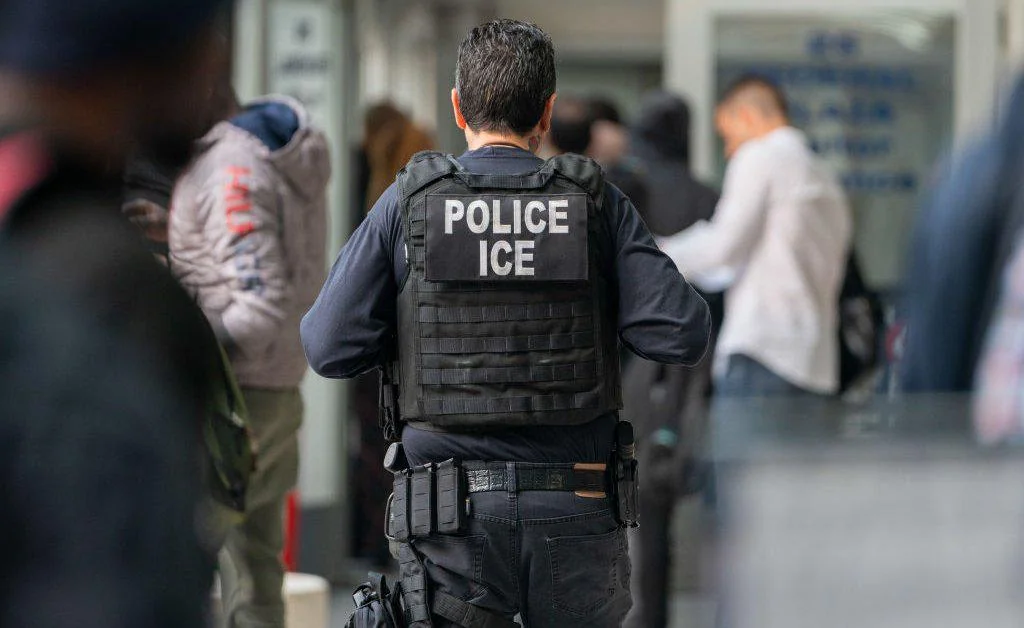
Immigration and Customs Enforcement, also known as ICE, has become an integral part of Trump’s administration in his second term. ICE under Trump now carries out more responsibilities than it previously did. In 2024 ICE’s net budget was around $10 billion and 11% of the spending from the Department of Homeland Security. This demonstrates the economic principle of opportunity costs since the government does not have an infinite amount of resources. ICE is also in charge of cross border trades, and thus can have an effect on supply chains. The ability of ICE to influence the resources allocated by the government, supply of workers, and supply chains shows the effect that ICE can have on the economy.
The concept of ICE was created in 2002 and via the Homeland Security Act 2002, and then became official in 2003 in response to the September 11 attacks in 2001. Their main goal is to preserve security and public safety within US borders via enforcing immigration laws: they focus on the illegal movement of humans and objects. Caleb Vitello is the current acting director and he reports to Department of Homeland Security Secretary Kristi Noem. In recent years ICE’s role has significantly increased; there have been increased workplace raids, heightened detention and removal programs, and policy shifts. ICE has specific programs such as the Enforcement and Removal Operations (ERO), which oversees mass deportations, and Homeland Security Investigations (HSI), which tackles cybercrime, trafficking, and smuggling. ICE can also now partner with local law enforcement to become more effective by expanding its reach into smaller communities.
Economic Impacts
Labor Force Effects
Undocumented immigrants make up a large portion of workers in industries such as agriculture, construction, hospitality, and food processing. When ICE conducts raids or increases deportations, employers in these sectors often struggle to replace workers, leading to labor shortages. In turn, production slows, costs rise, and consumers face higher prices.
Government Expenditure
Running ICE is expensive. The agency’s budget runs into billions of dollars annually, covering detention centers, legal proceedings, and deportation operations. Critics argue that the opportunity cost of increased spending on ICE may be high and that the funding could be redirected toward public services such as education, healthcare, or infrastructure, while supporters argue that the costs are justified for upholding the law. With the deficit and debt that the US government is running, some critics would argue that it would be more intelligent to redirect spending that will lead to long term economic growth and development.
Local Economies
The removal of workers also affects local communities. Families lose income, businesses lose customers, and neighborhoods lose stability. When immigrant households leave or restrict their spending due to fear, local shops, landlords, and schools all feel the impact. Over time, these disruptions may lead to erosion in local community stability and consumer confidence.
Consumer Behavior and Fear
Heavy ICE presence creates fear within immigrant communities, discouraging people from working, shopping, or accessing public services. The psychological impacts and financial insecurity in immigrant communities reduces overall economic activity in those regions, and thus may weaken small businesses, as they lose out on revenue. Subsequently, governments may lose out on tax revenue as local businesses crumble.
Case Studies
California Agriculture
California’s farming industry depends heavily on immigrant labor, with more than half of farmworkers estimated to be undocumented. Following intensified ICE operations between 2017 and 2019, farms reported severe worker shortages. Some left crops unharvested, resulting in financial losses and higher food prices. Local businesses in farming towns also reported a decline in sales as immigrant families cut back on spending or relocated.
Meatpacking Plants in the Midwest
In 2019, ICE raids at meatpacking plants in Mississippi led to the arrest of nearly 680 workers in one day. The plants faced immediate labor shortages, disrupting production and raising concerns about food supply and prices. Local communities also suffered as families lost income and economic activity slowed down in surrounding businesses.
Postville, Iowa
A 2008 ICE raid on a meatpacking plant in Postville, Iowa, resulted in nearly 400 arrests and is often cited as an example of economic collapse caused by enforcement. The town’s largest employer shut down, and local businesses lost customers. The raid left a long-lasting economic scar, showing how ICE actions can destabilize entire small-town economies.
Arguments from Different Perspectives
Supporters of ICE argue that enforcement protects American jobs, secures the nation’s borders, and upholds the rule of law. They believe strict immigration control discourages illegal entry and ensures fairness for legal immigrants and citizens. Critics, however, emphasize that these measures often harm the economy by removing essential workers, disrupting industries, and creating fear that weakens consumer activity. This divide underscores the tension between treating immigration primarily as a security issue and recognizing its economic contributions.
Future Considerations
The economic consequences of ICE suggest the need for policies that balance security with stability. Possible reforms include expanding guest worker programs, creating legal pathways for undocumented workers in essential industries, and building better systems for labor tracking and employer accountability. Collaboration between federal agencies, local governments, and businesses could help maintain law enforcement goals without undermining economic growth or community resilience.
Conclusion
The work of ICE demonstrates how immigration enforcement is deeply tied to the economy. From labor shortages and increased costs for businesses to reduced consumer activity and high government spending, its impacts extend into everyday economic life. The challenge for the future lies in finding policies that enforce immigration laws while also supporting labor markets, protecting communities, and promoting long-term national growth.
References
- “The Economic Impact of Mass Deportation in California.” Bay Area Council Economic Institute & UC Merced. https://www.bayareacouncil.org/report/economic-impact-of-mass-deportation-in-california/
- “Large-Scale Immigration Worksite Raids and Mixed-Status Families.” PMC / NIH (Public Health article). https://pmc.ncbi.nlm.nih.gov/articles/PMC8858889/
- “Worksite Immigration Raids Terrorize Workers and Communities: Long-Term Consequences.” NILC. https://www.nilc.org/articles/worksite-immigration-raids-terrorize-workers-and-communities-now-and-their-devastating-consequences-are-long-term/
- “Postville Raid.” Wikipedia (for basic facts). https://en.wikipedia.org/wiki/Postville_raid
- “Immigration raids leave crops unharvested, California farms at risk.” Reuters. https://www.reuters.com/business/immigration-raids-leave-crops-unharvested-california-farms-risk-2025-06-30/
- “Study shows impact of immigration enforcement on California’s overall workforce.” KPBS / Investigations. https://www.kpbs.org/news/border-immigration/2025/08/06/study-shows-impact-of-immigration-enforcement-on-californias-overall-workforce
- “California’s economy is already getting hit by immigration raids.” Los Angeles Times. https://www.latimes.com/business/story/2025-07-30/people-reporting-to-work-in-private-sector-in-california-down-after-raids-report-says
- “The Economic and Social Costs of Worksite Raids on Local Communities.” UnidosUS. https://unidosus.org/blog/2025/01/23/the-economic-and-social-costs-of-worksite-raids-on-local-communities/
- “The Postville Raid and the Criminalization of Migrants.” Erik Camayd-Freixas, UNI ScholarWorks. https://scholarworks.uni.edu/cgi/viewcontent.cgi?article=1076&context=postville_documents
- “The Postville Raid Brought Devastation; 15 Years Later …” Iowa Capital Dispatch. https://iowacapitaldispatch.com/2023/05/12/postville-raid-brought-devastation-15-years-later-its-a-sign-of-resilience/
- “Quantifying the Economic Impact of 2025 ICE Raids on California’s Agricultural Industry: A Case Study of Oxnard.” ArXiv / open preprint. https://arxiv.org/abs/2508.03787