Beyond Borders: The DRC–Rwanda Conflict
Introduction
The ongoing conflict between the Democratic Republic of the Congo (DRC) and Rwanda, which reignited in 2022, has reached its most dangerous stage in 2025. At the heart of this escalating crisis is the rebel group March 23 Movement (M23), which the Congolese government and international observers widely report as being backed by Rwanda. The most significant event of 2025 so far has been the seizure of Goma, a major eastern Congolese city, by M23 fighters in January. This event, along with the subsequent capture of Bukavu in February, has transformed the conflict into one of the most severe security and humanitarian emergencies in Africa.
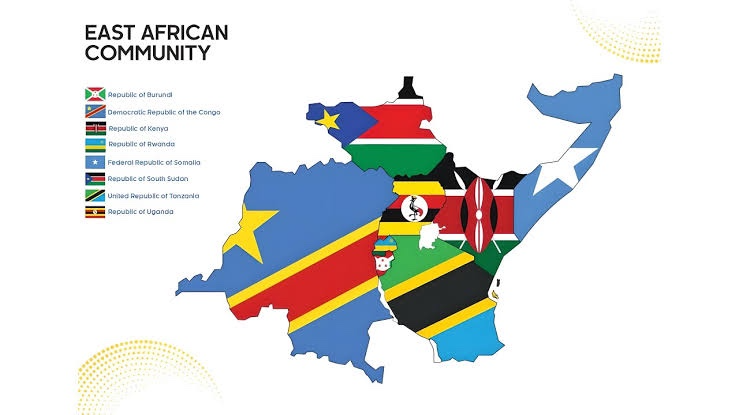
Both Kinshasa and Kigali offer starkly different explanations for the conflict. The Congolese government accuses Rwanda of sponsoring an illegal invasion of its territory, while Rwanda insists that the crisis stems from the DRC’s failure to dismantle the Democratic Forces for the Liberation of Rwanda (FDLR), a Hutu militia that includes remnants of the perpetrators of the 1994 Rwandan genocide. As tensions mount, the conflict has drawn in multiple regional and international actors, including the United Nations (UN), the African Union (AU), and the East African Community (EAC).
The escalation of 2025 has led to a crisis of significant proportions, where diplomatic interventions have largely failed, humanitarian agencies are overwhelmed, and geopolitical tensions threaten to further destabilize the region. This article examines the key events of 2025, explores the competing political narratives of both the DRC and Rwanda, and delves into the economic ramifications, as well as the ongoing humanitarian crisis that has left millions of people displaced and in desperate need of aid.
Timeline of Key Events
In early January 2025, M23 rebels launched a renewed offensive in North Kivu, targeting strategic towns such as Masisi and Sake. These locations are crucial defensive outposts for Goma, making their fall a significant precursor to the larger assault on the city. Within weeks, intense fighting erupted between the rebels and the Congolese military, leading to the displacement of more than 250,000 civilians. Despite previous ceasefire agreements, diplomatic efforts to contain the violence failed, and the battle for Goma became inevitable.
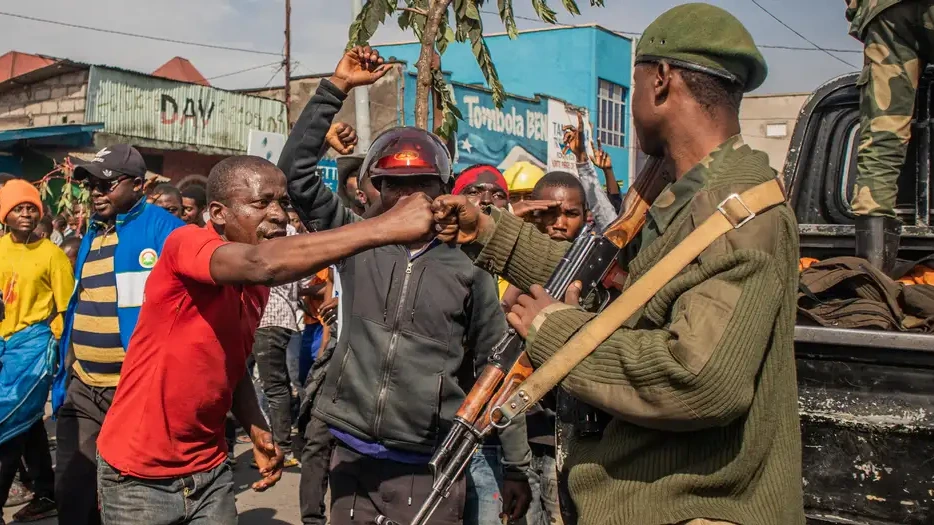
On January 23, UN Secretary-General António Guterres issued a stark warning about the potential consequences of the escalating conflict, emphasizing that the swift advances made by M23 rebels could trigger a broader regional war. The United Nations called on Rwanda to respect Congolese sovereignty and cease any alleged support for the rebels, but Kigali categorically denied any involvement. The situation worsened rapidly, and by January 27, after days of fierce combat, M23 successfully seized control of Goma. The Congolese army and allied militias, including local self-defense groups such as the Wazalendo, retreated from the city, leaving the rebels in full control. The government in Kinshasa initially hesitated to acknowledge the loss, while videos surfaced online showing M23 fighters patrolling the streets of the provincial capital.
Following the fall of Goma, humanitarian conditions in the city deteriorated at an alarming rate. Reports emerged of ongoing violence, mass displacement, and the destruction of civilian infrastructure. By the end of January, the United Nations estimated that more than 400,000 people had fled the city, with many seeking refuge in neighboring Rwanda and Uganda. Despite international condemnation and calls for immediate de-escalation, M23 pressed forward with its campaign, setting its sights on the South Kivu province.
Early February saw diplomatic activity accelerate, as leaders from the East African Community (EAC) and the Southern African Development Community (SADC) convened a joint summit in Dar es Salaam, Tanzania. On February 8, the summit – attended by Rwanda’s President Paul Kagame and DRC’s President Felix Tshisekedi (the latter via video link) – issued a call for an "immediate and unconditional ceasefire" in eastern DRC within five days. The communique also urged the opening of humanitarian corridors to assist civilians. Despite these diplomatic efforts, reports indicated ongoing clashes on the ground, with M23 fighters pushing further south.
By mid-February, M23 extended its offensive into South Kivu province after consolidating control in North Kivu. By February 16, rebel columns advanced on Bukavu, the capital of South Kivu, largely unopposed. The provincial governor confirmed that Congolese troops, along with allied Burundian forces deployed in the area, withdrew from Bukavu to avoid urban combat. M23 rebels entered Bukavu and claimed control of the city’s center, including the governor’s office, between February 16 and 17. Bukavu fell with little fighting, in stark contrast to the battle for Goma. Many government troops simply retreated, triggering widespread looting and a mass prison break amid the power vacuum. The capture of Bukavu – a second provincial capital – dealt another blow to the DRC government’s authority in the east. Regional observers warned that the rapid rebel gains were "fanning fears of a wider war" in Central Africa.
Late February saw international reactions intensify. The United Kingdom suspended bilateral aid to Rwanda and announced diplomatic sanctions in response to Kigali’s alleged support of the M23 offensive. British officials stated that Rwanda must withdraw its forces from the DRC and pursue a political solution, emphasizing that resolving Rwanda’s security concerns through military means was unacceptable. Rwanda’s government decried London’s move as "punitive" and accused the UK of "choosing a side" in the conflict. Similarly, other Western donors and the European Union faced pressure to reconsider aid or trade deals with Rwanda amid growing evidence of its involvement.
Political Narratives
The Congolese government frames the conflict as an illegal act of Rwandan aggression. President Félix Tshisekedi has repeatedly stated that M23 is merely a proxy force for Kigali and has called upon the international community to recognize Rwanda’s involvement as an act of war. The government has provided what it claims to be evidence of Rwandan military personnel fighting alongside M23, asserting that at least 3,000 Rwandan troops have entered Congolese territory under the guise of rebel forces. Kinshasa has demanded that the United Nations and the African Union impose heavy sanctions on Rwanda and provide material support for the Congolese army’s efforts to reclaim lost territory. Tshisekedi has vowed that the Congolese military will launch a counter offensive to recapture both Goma and Bukavu, insisting that the nation’s territorial integrity will not be compromised.
Rwanda, on the other hand, denies any direct involvement in the conflict and portrays the war as a domestic Congolese issue. President Paul Kagame has consistently argued that M23 is an independent Congolese rebel group fighting against marginalization and injustices perpetrated by Kinshasa. Furthermore, Kagame accuses the DRC of harboring the FDLR, a militia group that Rwanda views as an existential threat due to its links to the perpetrators of the 1994 genocide. Kigali claims that the FDLR has been launching attacks into Rwandan territory and that its presence in eastern Congo remains a primary security concern. The Rwandan government has dismissed calls for sanctions and warned that any foreign military intervention against its interests will be met with force.
Efforts to reach a diplomatic resolution have largely failed. The Luanda Agreement, led by Angola, and the Nairobi Process, spearheaded by Kenya, have produced multiple ceasefire agreements, but none have been effectively implemented. By 2025, Kinshasa refuses any negotiation with M23 unless the rebels completely withdraw, while Kigali continues to demand an inclusive political dialogue that includes M23 representatives. As a result, the conflict remains at an impasse, with no clear path to de-escalation.
Humanitarian Crisis
The scale of the humanitarian crisis in eastern DRC is staggering. More than 5.5 million people are internally displaced, while over a million Congolese have sought refuge in neighboring countries. The United Nations estimates that at least 21 million people across the country are in urgent need of humanitarian assistance. The battle for Goma alone resulted in nearly 3,000 civilian deaths, with thousands more wounded. Mass graves have been discovered in conflict zones, and human rights organizations report widespread sexual violence, looting, and forced conscription of child soldiers.
International humanitarian agencies, including Doctors Without Borders and the World Food Programme, are struggling to provide aid. Displacement camps are severely overcrowded, with acute shortages of food, clean water, and medical supplies. The United Nations and Western governments have called for an immediate cessation of hostilities, but with continued clashes and rising geopolitical tensions, relief efforts remain insufficient to address the full scale of the crisis.
The international community has taken some measures to pressure Rwanda. The United Kingdom suspended £32 million in aid, while Germany and the European Union are considering economic sanctions. There are growing calls to restrict Rwanda’s mineral exports due to evidence that M23 controls illicit mining operations in eastern Congo. However, diplomatic efforts remain fractured, and so far, punitive measures have not altered Rwanda’s strategic calculations.
Conclusion
The developments in 2025 have made the DRC–Rwanda conflict not only a Congolese crisis but a regional emergency with global implications. A clear timeline of escalating events – from the bold capture of Goma and Bukavu by M23 rebels to the massive displacement of civilians – paints a picture of a conflict spiraling out of control. Politically, both the DRC and Rwanda justify their actions with narratives rooted in legitimate historical traumas: Rwanda’s fear of genocidal militias and DRC’s anger at decades of meddling. However, these justifications cannot excuse the immense suffering inflicted on ordinary people. Humanitarian consequences – hundreds of thousands displaced, thousands dead, rampant abuses – demand an urgent response that prioritizes human life over political or economic interests. The international community must act urgently to prevent further bloodshed. A ceasefire, robust humanitarian assistance, and diplomatic pressure on both Rwanda and the DRC are essential. Advocacy for humanitarian intervention must focus on protecting civilians, restoring stability, and ensuring accountability for those fueling the violence.
References
- Amnesty International. "DR Congo: Armed Conflict and Human Rights Violations." Accessed February 2025. https://www.amnesty.org/en/countries/africa/democratic-republic-of-the-congo/.
- Human Rights Watch. "Rwanda and the M23 Rebellion." Accessed February 2025. https://www.hrw.org/report/2025/02/.
- United Nations Security Council. "Reports on the DRC-Rwanda Conflict." Accessed February 2025. https://www.un.org/securitycouncil/reports/drc-rwanda.
- African Union. "Statement on the Crisis in the DRC." Accessed February 2025. https://au.int/en/pressreleases/2025.
- East African Community. "Regional Diplomatic Efforts in the Great Lakes." Accessed February 2025. https://www.eac.int/diplomacy/drc-rwanda.
- VOA News. "Regional Leaders Call for Ceasefire in Eastern DRC." Accessed February 2025. https://www.voanews.com/.
- Reuters. "Bukavu Falls to M23 Rebels Amid Growing Regional Tensions." Accessed February 2025. https://www.reuters.com/.