When Crime Becomes Place: The Politics of Blame in South Korean Transnational Crime Narratives on Cambodia
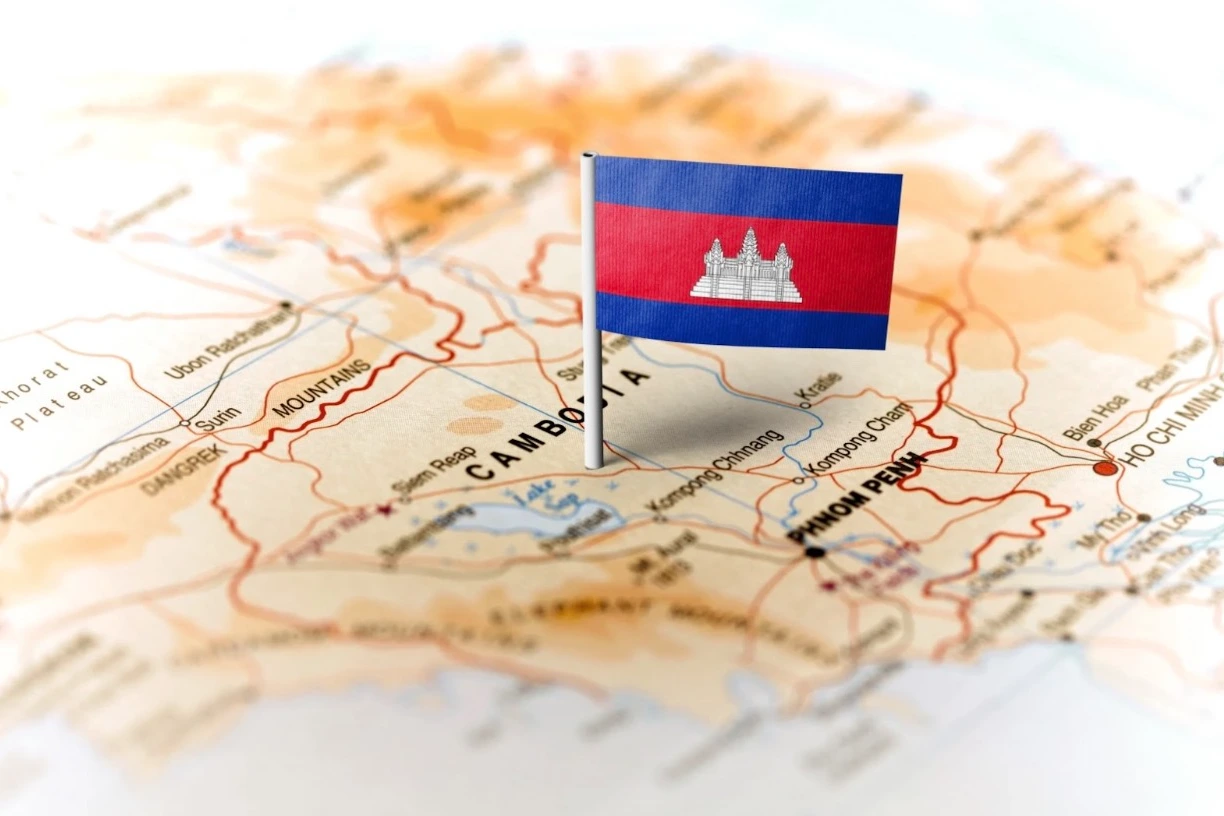
Since late 2025, as reference to The Diplomat, a series of crimes involving South Korean nationals in Cambodia has drawn sustained attention from South Korean media (Lee, 2025). Reports have described cases ranging from online scams to kidnapping and murder. In several widely covered incidents, young South Koreans traveling alone were lured through online contact, abducted, and targeted for ransom. Some were later found dead after payment attempts failed.
The coverage spread quickly. Major news outlets, including Reuters and the Diplomat, issued repeated updates, while online communities circulated warnings advising people to avoid Cambodia altogether. Within days, the incidents were no longer discussed only as crimes, but as evidence that the country itself was unsafe.
This reaction followed a familiar pattern. In comment sections and opinion columns, Cambodia was described as dangerous. Some responses echoed portrayals commonly seen in films and television, where Southeast Asia is framed as a setting linked to crime or escape. These associations shaped how the incidents were interpreted, even before investigations were complete.
What received less attention in headlines was who the crimes involved. According to multiple reports, many of the cases centered on South Koreans targeting other South Koreans (H. Kim, 2015; J. Kim, 2015). Victims were contacted in Korean, recruited through Korean social networks, and extorted by groups operating within the same linguistic community. While the crimes took place in Cambodia, the social links behind them were largely internal.
Data from South Korean police and diplomatic sources indicate that this was not an isolated pattern. As of August 2025, South Korea’s Foreign Ministry had recorded more than 300 cases of South Koreans reported kidnapped in Cambodia. In recent years, dozens of South Koreans have also been detained or repatriated in connection with scam related crimes (Lee and Park, 2025). These cases often involved transnational networks that relied on shared language and nationality rather than local connections. The crimes crossed borders, but they did not originate from Cambodian society alone.
Reporting by Reuters (2025) has shown that scam operations in Cambodia are part of organized, transnational networks, supported by fixed infrastructure rather than spontaneous local crime. In several cases, South Korean authorities noted that some individuals had joined such operations voluntarily, while others were coerced, complicating the narrative that the incidents were solely the result of location based risk.
Despite this, public discussion focused heavily on place. Travel advisories were strengthened, and Cambodia became shorthand for danger in news coverage. Attention shifted quickly toward geography, while the structure behind the crimes received less scrutiny. Place offered a simpler explanation than tracing responsibility across cross border criminal networks.
This framing reflects a long-standing pattern in how Southeast Asia appears in South Korean media. The region is frequently used as a backdrop for instability, with limited attention given to its social complexity. When real world crimes occur, this background framing makes it easier to attribute violence to location rather than to people or systems.
For local communities, the effects last beyond the news cycle. Members of the Korean community in Cambodia worry that the entire country may be stigmatized as crime-ridden, while also calling on authorities to take stronger preventive action as reported by KBS World News in 2025. Moreover, tour operators and residents have said that cancellations and prolonged uncertainty have affected livelihoods even in areas not directly connected to the crimes. According to the Korean Association in Cambodia, a travel agency recently saw around 300 cancellations from Korean tourists within just a few days.
What followed was a shift in perception that extended well beyond the crimes, affecting people and places untouched by the events themselves.
References
- Government issues travel ban for Cambodian crime hot spots. (2025). KBS World.
- https://world.kbs.co.kr/service/news_view.htm?Seq_Code=196667&lang=e
- KBS News. “[현장연결] 여행 취소·뒤숭숭한 교민 사회…이 시각 캄보디아 [9시 뉴스] / KBS 2025.10.14.” YouTube, 14 Oct. 2025, www.youtube.com/watch?v=YdzVXd5yF80.
- Lee, Eunwoo. (2025, October 24). “With Hundreds of Kidnappings, South Korea
- Grapples with Cambodia’s Organized Crime Wave.” Thediplomat.com,
- The Diplomat, thediplomat.com/2025/10/with-hundreds-of-kidnappings
- -south-korea-grapples-with-cambodias-organized-crime-wave/.
- Park, J.-M., & Lee, J. (2025, October 20). Police seek to detain most South Koreans
- returned from Cambodia over online scams. Reuters. https://www.reuters.com
- /sustainability/society-equity/police-seek-detain-most-south-koreans-returned
- -cambodia-over-online-scam-schemes-2025-10-20/
- University student tortured, killed in Cambodia allegedly recommended for “job” by
- senior at school. (2025, October 14). Korea JoongAng Daily. koreajoongang
- daily.joins.com/news/2025-10-14/national/socialAffairs/University-student-tor
- tured-killed-in-Cambodia-allegedly-recommended-for-job-by-senior-at-school
- /2419218.