The Reconstruction Cycle: Economic and Environmental Impacts of the Korean Apartment Problem
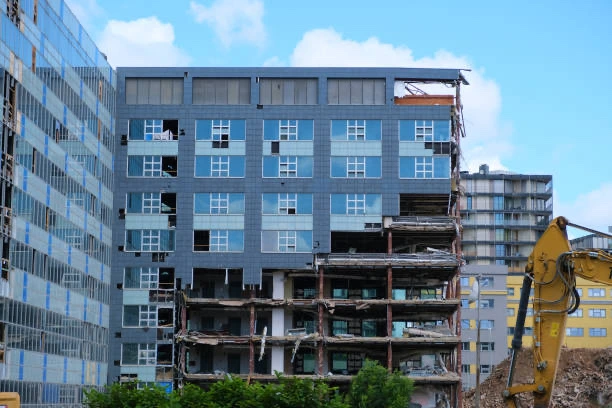
In South Korea, high-rise apartments have become symbols of modernity, wealth, and social status, but the country’s ongoing cycle of demolishing and rebuilding aging yet structurally sound complexes is causing serious issues. This reconstruction boom has led to skyrocketing housing costs, exacerbating social inequality and widening the economic divide, particularly in urban centers like Seoul and Busan. Developers, motivated by profit and the constant demand for newer, upscale living spaces, pressure local governments and residents to approve redevelopment projects that focus on market value rather than community needs. As a result, lower-income families are displaced, speculative real estate investments rise, and property prices soar, creating an unsustainable housing bubble. This article delves into the economic pressures, policy failures, and environmental toll of South Korea’s apartment reconstruction problem, questioning whether the relentless drive for modernization is truly progress or an unsustainable cycle that threatens the nation’s economic stability and environmental resilience.
Economic Impacts of Apartment Reconstruction
Construction Costs
The price of construction materials increased by 35.6% from 2020 to 2023. Since 2018, when the supply of construction materials decreased, supply and demand problems have occurred, which has deepened the construction recession. A shortage of materials such as rebar, cement, and ready-mixed concrete has occurred, and this is analyzed to be the result of a combination of domestic and foreign economic factors. When the construction economy is in a slump, material production tends to decrease, and accordingly, it has been suggested that the government should stabilize the supply and demand of materials through a construction investment activation policy.
The construction economy is expected to remain sluggish in 2024, and demand for major materials such as cement, ready-mixed concrete, and rebar is expected to decrease. Although the government's efforts to activate large-scale civil engineering projects or housing supply may ease some of the demand for some materials, a decrease in the overall construction volume seems inevitable.
Environmental Impacts
Suspicion of illegal landfill
Environmental groups claimed that trash and waste were illegally landfilled during the golf course development process in January of last year. The golf course announced that the results of a soil analysis conducted by a specialized agency at 13 locations in November of last year showed that fluorine and zinc concentrations exceeded the standard at some locations. However, the relevant laws were later revised and the fluorine standard was significantly raised, and the golf course refuted this, saying that there was no legal issue.
Environmental group response
Environmental groups stated that they only discovered the components exceeding the standard and raised the issue, and that there was no intentional demand. They also claimed that the waste was confirmed with the naked eye during an on-site investigation.
Case Study:
Raemian One Bailey - A New Luxury Apartment Complex in Gangnam Located in Banpo-dong, Seocho-gu, Seoul, Raemian One Bailey is a large apartment complex that was rebuilt by integrating Sinbanpo 3cha and Gyeongnam Apartments. It has a total of 2,990 households, of which 224 are for general sale. The complex design was carried out in cooperation with an overseas design firm (SMDP). It has high-end community facilities that play an important role in improving the quality of life of residents. For example, there are various amenities such as a guesthouse, smart office, fitness center, swimming pool, sauna, and sky lounge. In particular, the rooftop camping site with a view of the Han River and the multipurpose indoor gymnasium further enrich the lives of residents. There was controversy over the sales price, but the cooperative is hoping for 57 million won compared to the 48.91 million won per 3.3㎡ suggested by the Housing and Urban Guarantee Corporation (HUG). Accordingly, the sales price has not been confirmed, so it may be difficult to sell within the year, but the sales price of Raemian One Bailey is expected to exceed that of Acro River Park, the most expensive complex in the area.
Recently, a 133㎡ (52 pyeong) apartment was traded for 10.6 billion won, and this is the first time that an apartment worth over 10 billion won has been released in Seocho-gu. While large-scale apartments in Gangnam, such as Hannam the Hill, continue to record the highest prices, Raemian One Bailey is also following this trend.
Impacts
The reconstruction of Raemian One Bailey has had a significant impact on the real estate market in Seocho-gu. The high sale price, which is expected to surpass the surrounding most expensive complex, Acro River Park, is leading to an increase in apartment prices in Gangnam. In particular, the transaction price of high-end apartments is exceeding 10 billion won, creating a new trend in the real estate market in this area. Many jobs are being created due to the reconstruction, contributing to the revitalization of the local economy. In terms of the environment, Raemian One Bailey has created a sustainable residential environment by introducing eco-friendly design and a smart home system. It has improved indoor air quality through fine dust measurement and an automatic ventilation system, and has increased energy efficiency through an IoT-based smart home system. This design provides residents with a healthy and comfortable living space, while also contributing to environmental protection.
Sustainable Practices
Eco-friendly building technology
1. Green Roof
A green roof is a technology that reduces the urban heat island effect by planting plants on the roof of a building and maximizes rainwater management and insulation effects. The "LH Green Home Project" in Seoul demonstrated the effect of reducing cooling energy in the summer and improving air quality by applying a green roof.
2. Solar Panels
Solar power generation contributes to reducing carbon emissions by increasing the use of renewable energy. Banpo Raemian One Bailey (Banpo Raemian One Bailey) actively introduced eco-friendly energy and reduced public power consumption by utilizing solar panels.
3. Energy-Efficient Windows
High-efficiency insulated windows play an important role in reducing energy consumption. The "Zero Energy Apartment" in Eunpyeong-gu, Seoul, applied triple-glazed windows and high-performance insulation to significantly reduce energy consumption for heating and cooling.
Government Policy and Support
1. Green Building Certification System (G-SEED)
The government operates the Green Building Certification System (G-SEED, Green Standard for Energy and Environmental Design) to promote eco-friendly architecture. The ‘Songdo Smart City’ apartments built in Songdo International City received the highest G-SEED rating and are evaluated as an exemplary case of eco-friendly architecture.
2. Mandatory Zero-Energy Architecture
The government is mandating zero-energy architecture for public buildings starting in 2025, and this will be expanded to the private sector. Accordingly, large construction companies are developing zero-energy apartment complexes, with the ‘Nowon Energy Zero House’ (NOWON EZ HOUSE) in Seoul being a representative example.
3. Renewable Energy Subsidies
The government is providing subsidies to encourage the use of renewable energy such as solar energy, geothermal energy, and wind power. Accordingly, the ‘Wirye New Town Eco-friendly Apartment’ in Seongnam-si, Gyeonggi-do, actively introduced a solar power generation system to increase its energy self-sufficiency rate.
Conclusion
Apartment reconstruction provides significant economic benefits, such as rising property values, a stronger real estate market, and a boost to local economies through construction activities. However, it also presents notable environmental challenges, including excessive waste, high energy consumption, and increased carbon emissions from demolition and reconstruction. To address these issues, more research is needed in several key areas. Developing cost-effective, eco-friendly construction materials, like recycled concrete, low-carbon cement, and bio-based insulation, can help reduce the environmental impact. Improving waste management and recycling technologies will minimize demolition waste and promote the reuse of materials. Additionally, adopting energy-efficient designs and sustainable urban planning, such as passive cooling systems and green roofs, can enhance the long-term sustainability of reconstructed buildings. In the end, balancing economic growth with environmental responsibility is crucial for future urban development. By exploring innovative solutions, policymakers, architects, and engineers can work together to create sustainable, efficient living environments. Prioritizing environmental sustainability while ensuring economic benefits is essential as cities continue to evolve.
References
- https://www.moneys.co.kr/article/2024021910092288253
- https://www.todayenergy.kr/news/articleView.html?idxno=278285
- https://www.incheonilbo.com/news/articleView.html?idxno=1277495
- https://namu.wiki/w/%EB%9E%98%EB%AF%B8%EC%95%88%20%EC%9B%90%EB%B2%A0%EC%9D%BC%EB%A6%AC
- https://www.seoul.co.kr/news/newsView.php?id=20201102021006&wlog_tag3=naver
- https://www.segye.com/newsView/20250203514104?OutUrl=naver
- https://www.businesspost.co.kr/BP?command=article_view&num=305949
- https://www.arunews.com/news/articleView.html?idxno=43848
- https://www.incheonilbo.com/news/articleView.html?idxno=1277495
- https://shorturl.at/H3x9k