The Hong Kong-China Conflict: A Historical Overview and Current Developments
Introduction
The Hong Kong-China conflict is a political issue that has been ongoing for decades. It has become increasingly prominent in recent years due to the 2019 Hong Kong protests, which saw millions of Hong Kongers take to the streets to demand greater autonomy and democracy. The conflict centers around the relationship between Hong Kong, a former British colony, and China, which regained sovereignty over Hong Kong in 1997. Despite being a special administrative region (SAR) of China, Hong Kong is meant to have a high degree of autonomy and a separate legal system from mainland China. However, there are concerns that China is eroding Hong Kong's autonomy and infringing on its civil liberties, leading to tensions and protests. This report will provide an overview of the Hong Kong-China conflict, including its historical background, current situation, and potential future developments.
Historical Background
The Hong Kong-China conflict has its roots in the colonial era. Hong Kong was a British colony from 1841 until 1997 when it was handed back to China under the principle of "one country, two systems." This principle was meant to guarantee Hong Kong's autonomy and its way of life, including its capitalist economy, independent judiciary, and free press. However, the agreement was only meant to last for 50 years, until 2047, after which Hong Kong would fully integrate into China.
In the early years after the handover, there was some optimism that the "one country, two systems" model could work. However, there were also concerns that China would eventually erode Hong Kong's autonomy and infringe on its civil liberties. These concerns were fueled by a number of incidents, including the 2003 SARS outbreak, which saw China attempt to censor information coming out of Hong Kong, and the 2008 protests against a proposed national education curriculum, which were seen as an attempt to promote Chinese patriotism in Hong Kong schools.
The situation came to a head in 2014 when Hong Kong held a series of protests known as the Umbrella Movement. The protests were sparked by China's decision to screen candidates for Hong Kong's chief executive elections, which many Hong Kongers saw as a violation of their right to choose their own leaders. The Umbrella Movement was ultimately unsuccessful in achieving its goals, but it set the stage for the much larger protests that would come in 2019.
Current Situation
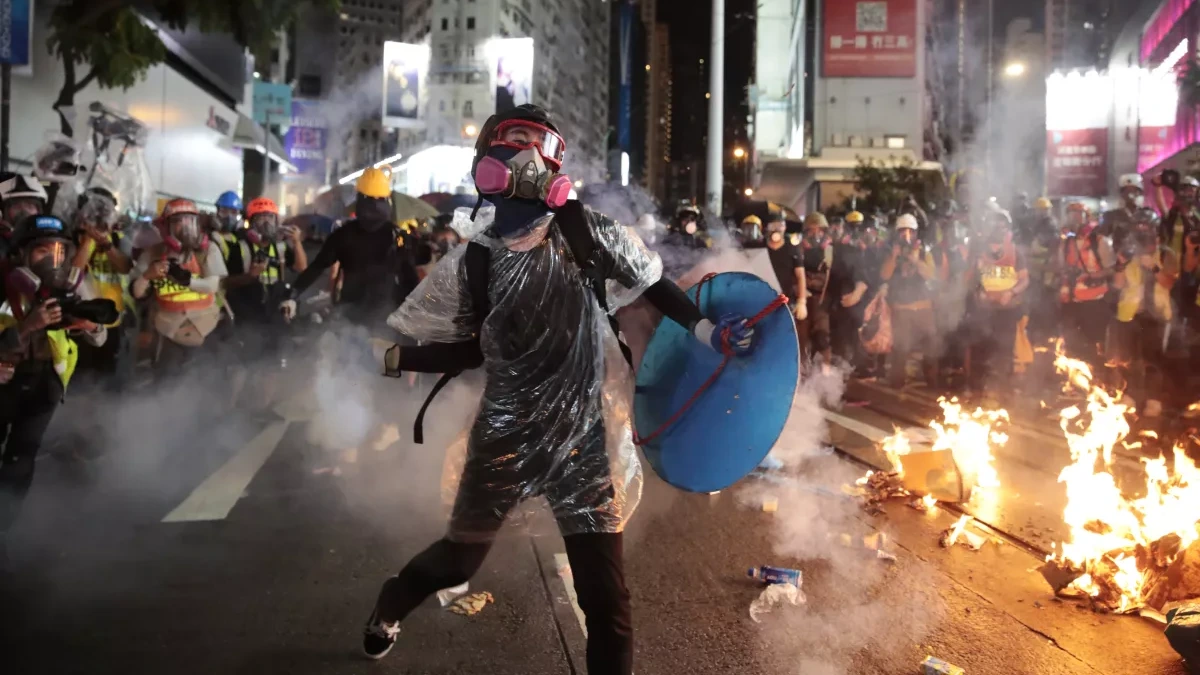
The 2019 Hong Kong protests began in June and continued for several months. The protests were sparked by a proposed extradition bill that would have allowed people in Hong Kong to be extradited to mainland China for trial. Many Hong Kongers saw this as a violation of their rights and a threat to the city's autonomy. The protests quickly grew in size and scope, with millions of people taking to the streets to demand greater democracy and police accountability. The protests were largely peaceful, but there were occasional clashes with police and pro-Beijing counter-protesters.
The Chinese government responded to the protests with a mixture of repression and propaganda. On the one hand, the government attempted to discredit the protesters as violent radicals and foreign agents. On the other hand, it also used force to suppress the protests, including tear gas, rubber bullets, and arrests. The police were criticized for using excessive force and for being too closely aligned with the Chinese government.
Despite the government's efforts to suppress the protests, they continued for several months. However, they eventually petered out due to a combination of fatigue, repression, and the COVID-19 pandemic. In the aftermath of the protests, there have been concerns that China is cracking down on civil liberties and democracy in Hong Kong. The government has passed a new national security law that criminalizes acts of secession, subversion, terrorism, and collusion with foreign forces.



