The 2020 Belarusian Protests: An Analysis of Democratic Resistance and Authoritarianism
Introduction
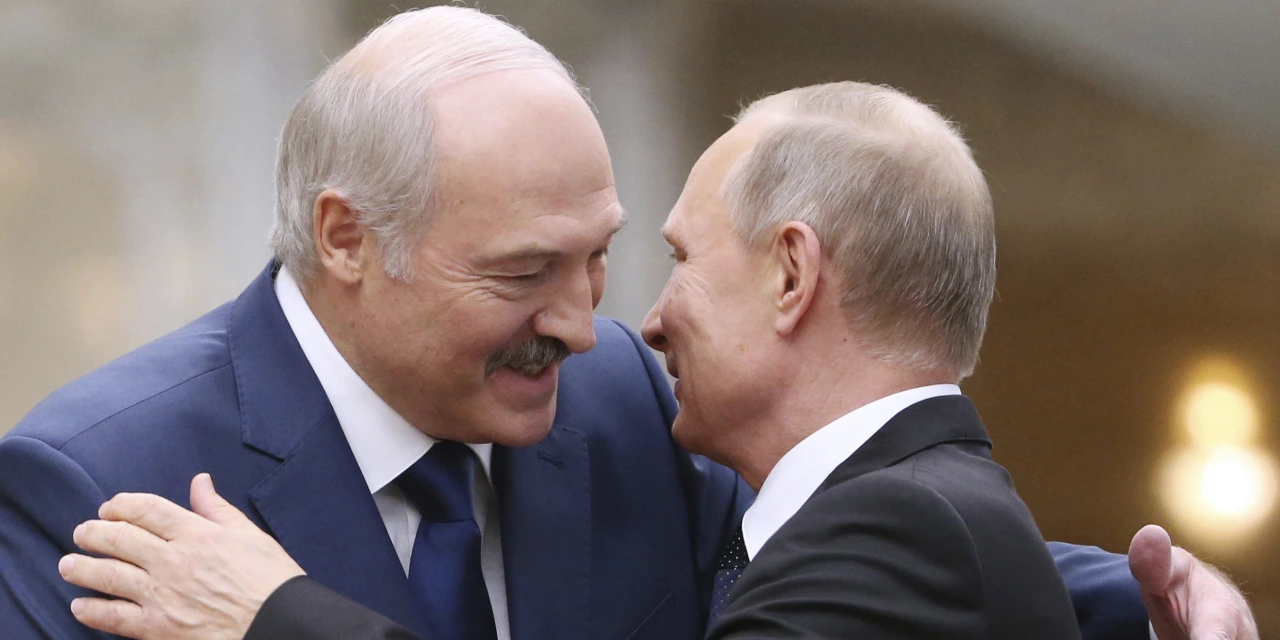
The 2020 Belarusian protests marked a pivotal moment in the country's history, as citizens took to the streets to challenge the authoritarian regime of President Alexander Lukashenko. The protests were triggered by Lukashenko's controversial re-election for a sixth term, which was widely perceived as fraudulent. The ensuing protests were met with violent repression from the state, but they also generated international attention and solidarity. This report will provide a comprehensive analysis of the 2020 Belarusian protests, focusing on the dynamics of democratic resistance and authoritarianism, and analyzes the future of democracy in Belarus, exploring both the challenges to democratic transition and the opportunities for democratic progress.
Historical and Political Context of Belarus
Source: Britannica
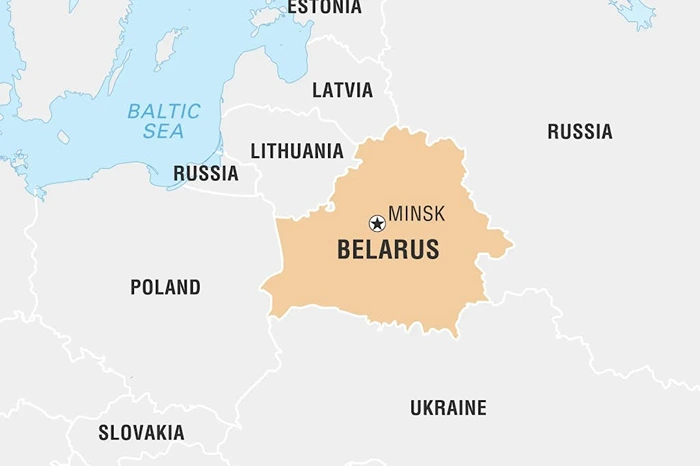
Belarus, officially known as the Republic of Belarus, is a landlocked country located in Eastern Europe, bordered by Russia to the east and northeast, Ukraine to the south, Poland to the west, and Lithuania and Latvia to the northwest. Belarus has a long and complex history that has contributed to its current political and social situation.
Belarus was originally part of Kievan Rus, a loose federation of East Slavic tribes that existed from the late 9th to the mid-13th century. In the late 14th century, the Grand Duchy of Lithuania, which included Belarus, was formed. In the 16th century, the Grand Duchy of Lithuania joined with the Kingdom of Poland to form the Polish-Lithuanian Commonwealth, which lasted until the late 18th century. During this time, Belarus experienced significant cultural and economic growth, but also suffered from frequent wars and political instability.
In 1795, Belarus was partitioned between Russia, Prussia, and Austria, and remained under Russian control until World War I. Following the Russian Revolution in 1917, Belarus declared independence, but it was soon occupied by Soviet forces. In 1922, Belarus became a founding member of the Union of Soviet Socialist Republics (USSR), and remained part of the USSR until its collapse in 1991.
Source: charter97
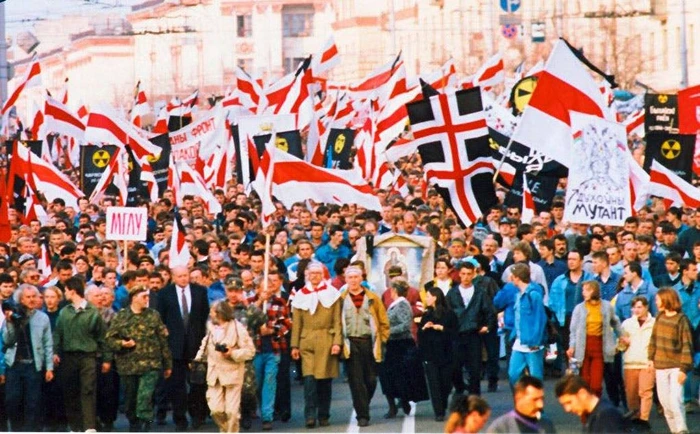
Belarus declared independence from the USSR on August 25, 1991. Since then, Belarus has experienced significant political upheaval, including economic crises, corruption scandals, and protests. The first president of Belarus, Alexander Lukashenko, was elected in 1994 and has remained in power since then.
Lukashenko's government has been criticized for its authoritarianism, lack of political freedoms, and human rights abuses. In the 2020 presidential election, Lukashenko claimed victory with 80% of the vote, but the opposition and international observers alleged widespread voter fraud and irregularities.
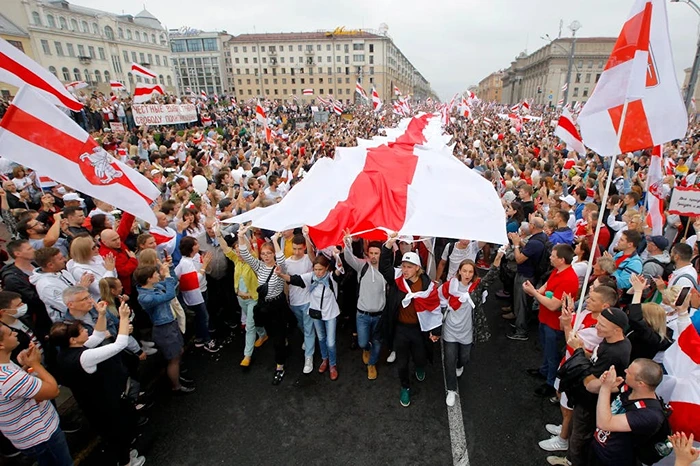
The election results sparked protests across Belarus, with hundreds of thousands of people taking to the streets to demand fair and free elections and the resignation of Lukashenko. The government responded with violence, including the arrest and detention of opposition leaders and protesters, and the use of tear gas, water cannons, and rubber bullets.
The 2020 Belarusian Protests: A Democratic Uprising Against the Status Quo
Source: Human Rights Watch
A. Igniting Change: Triggers and Timeline of the Protests
The 2020 Belarusian protests were triggered by the controversial presidential election held on August 9, 2020, which saw Alexander Lukashenko, the incumbent president, claim a landslide victory with 80% of the vote. However, the opposition and independent observers denounced the election as fraudulent and rigged. As a result, mass protests erupted across the country, and the police responded with brutal force. The protests continued for several months, with regular demonstrations taking place every weekend. By October 2020, it was estimated that over 100,000 people had participated in the protests, making it the largest political protest movement in Belarus since the country gained independence from the Soviet Union in 1991.
B. Voices for Change: Protesters' Demands and Goals
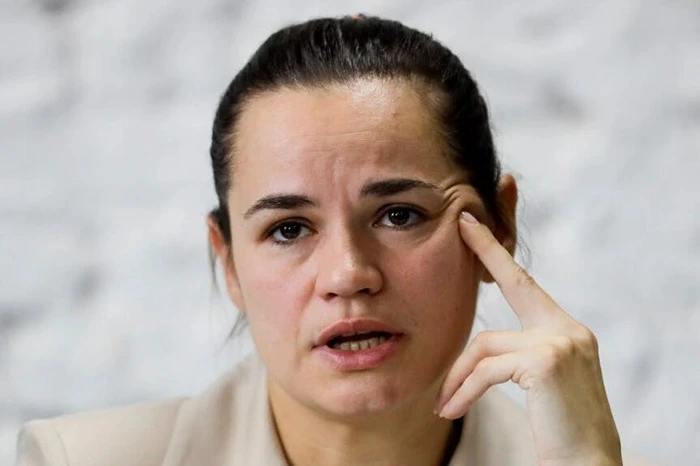
The protesters' demands were multifaceted, but they primarily focused on three key demands: the resignation of Lukashenko, a new free and fair presidential election, and the release of political prisoners. The protesters also demanded an end to police brutality and the establishment of an independent investigation into the violence. In addition, the protests called for greater freedom of the press and the establishment of a more democratic and pluralistic society. According to a survey conducted by the Belarusian Institute for Strategic Studies, the majority of protesters identified themselves as pro-democracy and anti-Lukashenko, with 90% of respondents indicating that they supported the opposition candidate Sviatlana Tsikhanouskaya. The protests also had a significant gender dimension, with women playing a prominent role in the demonstrations and organizing their own marches and rallies.
Source: VOA
C. Changing the Game: Emerging Trends in Protest Tactics
The 2020 Belarusian protests were characterized by innovative and decentralized forms of protest. In response to the government's crackdown on traditional forms of protest, such as rallies and demonstrations, protesters began to adopt new tactics such as flash mobs, bicycle rides, and peaceful marches. These tactics enabled protesters to avoid detection and arrest by the police while also maintaining momentum and visibility. In addition, protesters used social media platforms such as Telegram to coordinate and mobilize demonstrations, share information, and document police brutality. The use of technology and digital communication played a crucial role in the success of the protests, allowing protesters to circumvent government censorship and spread their message both domestically and internationally.
D. The Power of the People: The Role of Technology and Social Media in the Protests
Social media played a critical role in the 2020 Belarusian protests, allowing demonstrators to organize and communicate with each other despite government censorship and repression. Telegram, a messaging app, became the primary platform for communication, with protesters using it to coordinate protests, share information, and warn each other about police activity. According to data from SensorTower, a mobile app data provider, downloads of Telegram in Belarus increased by 900% in the days following the election. Social media also helped to spread awareness of the protests outside of Belarus, with the hashtag #BelarusSolidarity trending globally on Twitter.
IV. The Lukashenko Regime's Response: Repression and Propaganda
A. Suppressing the Movement: The Regime's Efforts to Halt the Protests
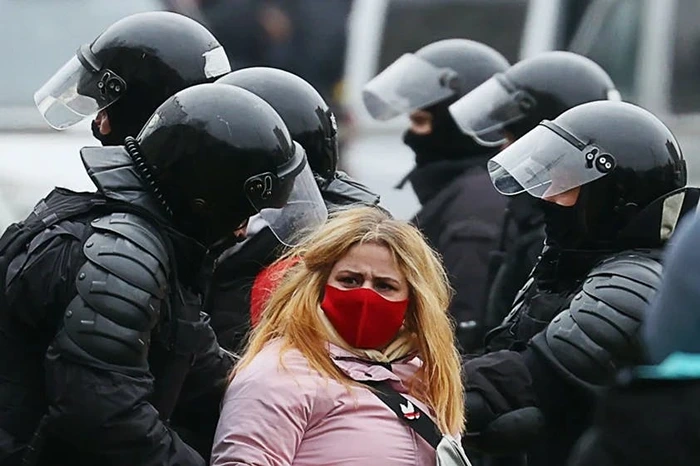
The Lukashenko regime responded to the 2020 protests with a brutal crackdown on dissent. According to the Viasna Human Rights Centre, over 30,000 people were arrested in connection with the protests, with reports of beatings, torture, and rape in detention. The regime also employed various tactics to stifle the protests, including cutting off internet access, blocking social media sites, and shutting down independent media outlets.
Source: BBC News
B. Controlling the Narrative: Media Control and Propaganda Tactics
In addition to using force, the regime relied on media control and propaganda to shape public opinion and delegitimize the protests. The state-controlled media portrayed the protesters as criminals and foreign-backed agitators, and spread disinformation about the movement. The regime also targeted journalists and media outlets critical of the government, with over 400 cases of press freedom violations recorded by the Belarusian Association of Journalists.
C. Brutality Unleashed: The Use of Violence and Torture Against Protesters
The regime's response to the protests included the use of violence and torture against protesters. Reports from human rights organizations and media outlets documented instances of police brutality, including the use of stun grenades, water cannons, and rubber bullets. In detention, protesters were subjected to physical and psychological abuse, with reports of beatings, electric shocks, and threats of sexual violence. The use of torture by the regime was condemned by the United Nations and other international organizations, and further fueled public anger and opposition to the Lukashenko regime.
VI. Analyzing the Future of Democracy and Authoritarianism in Belarus
Source: The New York Times
A. Roadblocks to Democratic Transition: Challenges Ahead
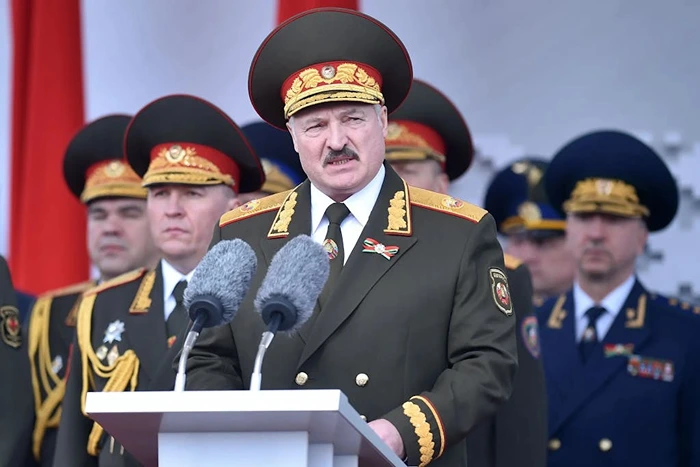
Despite the significant public outcry, the Lukashenko regime remains in power, with opposition leaders either exiled or imprisoned. As of December 2021, 653 people had been sentenced to prison terms for their participation in the protests, with some sentences as long as 25 years. The regime has also cracked down on civil society organizations and independent media, with journalists and media outlets facing censorship, harassment, and arrests. Belarus ranks 157 out of 180 countries in the 2021 World Press Freedom Index, highlighting the severe restrictions on freedom of expression in the country.
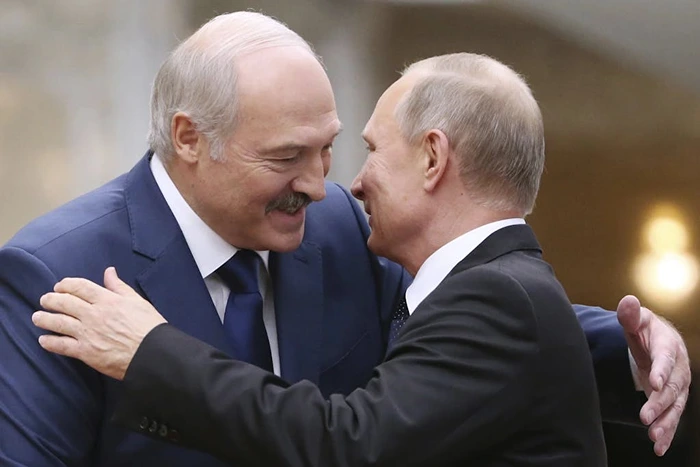
Belarus' economy heavily relies on Russia, which provides significant financial and political support to the Lukashenko regime. In 2020, Russia provided Belarus with a $1.5 billion loan to help prop up its economy, and has continued to offer support in the face of international sanctions. This financial dependence creates a significant challenge for Belarus to transition to democracy, as Russia's support for Lukashenko provides a critical lifeline for the regime.
Source: DW News
B. The Way Forward: Opportunities for Democratic Progress
Despite the challenges, there have been some signs of progress towards democracy in Belarus. Civil society groups and opposition movements within Belarus continue to work towards democratic change, despite the risks involved. In October 2021, the Belarusian opposition movement won the Sakharov Prize for Freedom of Thought, a prestigious human rights award, which recognizes the significant contributions of activists in the struggle for human rights and democracy in Belarus.
International pressure and sanctions have also been effective in weakening the Lukashenko regime. In December 2021, the European Union imposed new sanctions on Belarus, including restrictions on its financial sector, in response to human rights abuses and political repression. These sanctions have had a significant impact, with Lukashenko's regime facing increasing financial strain and international isolation.
In August 2021, Sviatlana Tsikhanouskaya, the main opposition candidate in the 2020 presidential election, met with U.S. President Joe Biden to discuss the situation in Belarus and potential avenues for democratic reform. This meeting highlights the growing international attention and support for democratic change in Belarus, providing opportunities for continued progress towards democratic reform.
Conclusion
In conclusion, the 2020 protests in Belarus served as a democratic uprising against the longstanding authoritarian regime of President Alexander Lukashenko. The protests were triggered by allegations of election fraud and quickly grew into a massive movement demanding democratic reforms and a change in leadership. Despite facing brutal repression and propaganda from the Lukashenko regime, protesters and civil society groups continued to push for democratic progress, while international pressure and sanctions weakened the regime's grip on power.
Moving forward, the challenges and opportunities for democracy in Belarus remain significant. The Lukashenko regime continues to hold power, with opposition leaders imprisoned or exiled, and the economy heavily reliant on Russia. However, the recent actions taken by international actors and civil society groups demonstrate a potential path towards democratic progress. Future research should focus on identifying effective strategies for supporting democratic transitions in authoritarian regimes, as well as understanding the role of social media and technology in shaping political movements. Ultimately, the future of democracy in Belarus and other authoritarian states will depend on a complex interplay of political, economic, and social factors, and the success of democratic transitions will require sustained effort and collaboration from both domestic and international actors.
References
- BBC News. (2020, August 10). Belarus election: Opposition candidate Tikhanovskaya flees country. BBC News. https://www.bbc.com/news/world-europe-53771053
- BBC News. (2020, August 13). Belarus opposition leader Svetlana Tikhanovskaya: 'I didn't want to leave, but I had no choice'. BBC News. https://www.bbc.com/news/world-europe-53789039
- BBC News. (2020, November 27). Belarus crisis: Who are the key players? BBC News. https://www.bbc.com/news/world-europe-54953599
- Britannica. (n.d.). Belarus. In Encyclopædia Britannica. Retrieved February 22, 2023, from https://www.britannica.com/place/Belarus
- Charter'97. (2022, August 25). Belarusian dictator Lukashenko introduces sweeping new censorship laws. Charter'97. https://charter97.org/en/news/2022/8/25/512743/
- Deutsche Welle. (2020, September 14). Opinion: Putin wants Belarus in Moscow's orbit, with or without Lukashenko. Deutsche Welle. https://www.dw.com/en/opinion-putin-wants-belarus-in-moscows-orbit-with-or-without-lukashenko/a-54631980
- European Council. (2021, December 17). Council implements new sanctions against Belarus in response to human rights violations and repression. https://www.consilium.europa.eu/en/press/press-releases/2021/12/17/council-implements-new-sanctions-against-belarus-in-response-to-human-rights-violations-and-repression/
- European Parliament. (2021, October 21). Sakharov Prize 2021: Belarusian opposition wins human rights award. https://www.europarl.europa.eu/news/en/headlines/world/20211018STO16721/sakharov-prize-2021-belarusian-opposition-wins-human-rights-award
- Freedom House. (2021). Belarus. https://freedomhouse.org/country/belarus/freedom-world/2021
- Human Rights Watch. (2021, December 7). Belarus: Mass Convictions, Prison Terms for Peaceful Protesters. https://www.hrw.org/news/2021/12/07/belarus-mass-convictions-prison-terms-peaceful-protesters
- Kramer, A. E., & Higgins, A. (2020, August 24). Belarus’s Leader Faces Unprecedented Protests, but Holds On. The New York Times. https://www.nytimes.com/2020/08/24/world/europe/Lukashenko-Belarus.html
- Reporters Without Borders. (2021). World Press Freedom Index 2021. https://rsf.org/en/ranking
- Reuters. (2020, September 14). Russia grants $1.5 billion loan to Belarus. Reuters. https://www.reuters.com/article/us-belarus-russia-loan-idUSKBN2610G0
- U.S. Department of State. (2022, January 10). 2021 Country Reports on Human Rights Practices: Belarus. https://www.state.gov/reports/2021-country-reports-on-human-rights-practices/belarus/
- Voice of America. (2021, September 21). Belarusian Opposition Leader Flees to Lithuania. https://www.voanews.com/a/europe_belarusian-opposition-leader-flees-lithuania/6194280.html
- White House. (2021, August 16). Readout of President Biden’s Meeting with Sviatlana Tsikhanouskaya of Belarus. https://www.whitehouse.gov/briefing-room/statements-releases/2021/08/16/readout-of-president-bidens-meeting-with-sviatlana-tsikhanouskaya-of-belarus/



