Myanmar's Military Coup: A Shocking Turn of Events in the Land of Golden Pagodas
Introduction
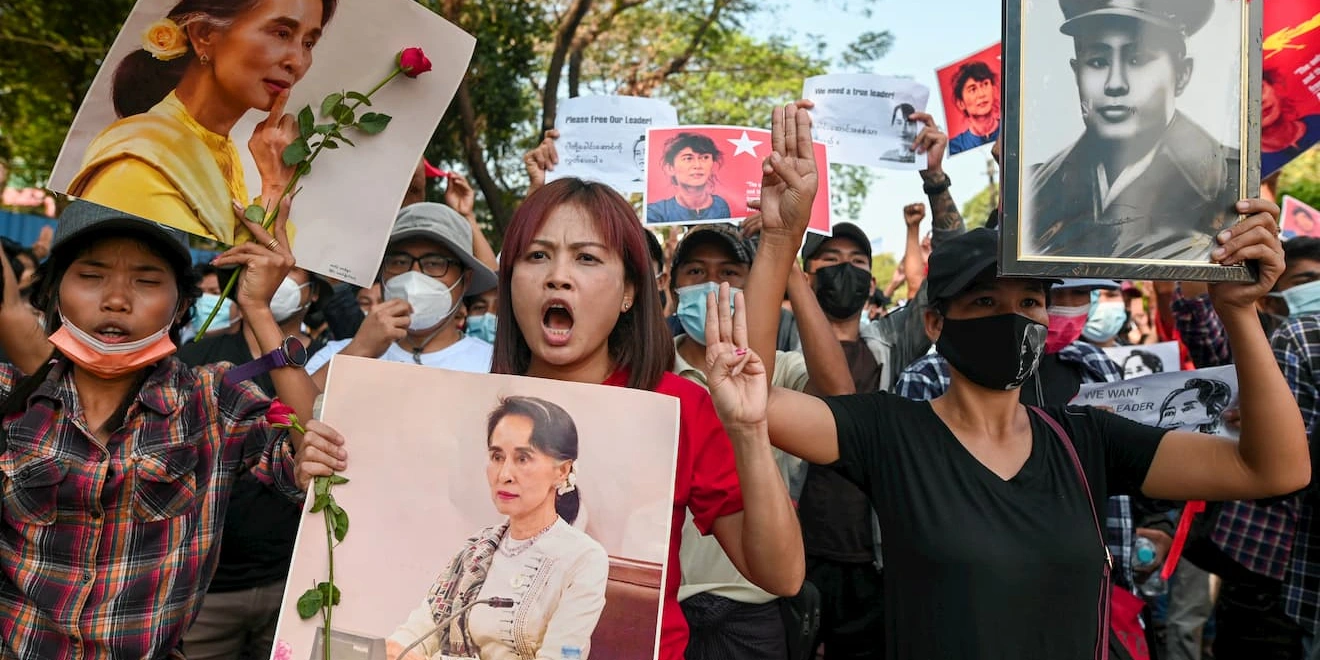
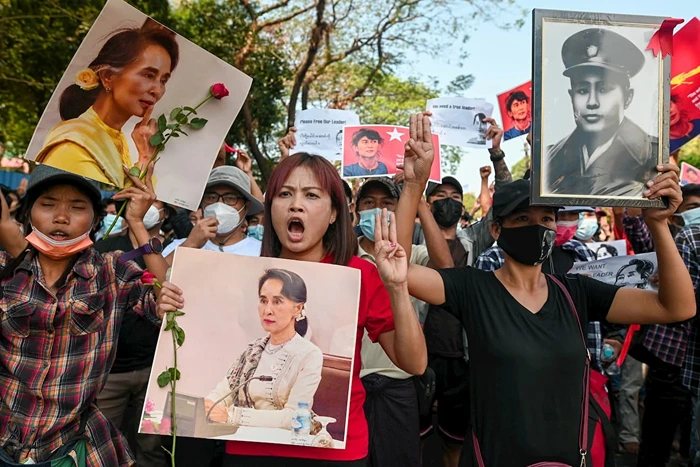
In February 2021, Myanmar's military staged a coup, ousting the democratically elected government and detaining its leaders, including State Counsellor Aung San Suu Kyi. The military's actions have led to widespread protests and violence, with the international community condemning the coup and calling for the restoration of democracy in Myanmar. The situation in the country remains tense, with the military cracking down on dissent and civil society groups working to resist their actions. The coup has thrown Myanmar's future into uncertainty, with many fearing for the country's democracy and stability.
Source: Reuters in The Guardian
Tensions between Aung San Suu Kyi and the Military Regime
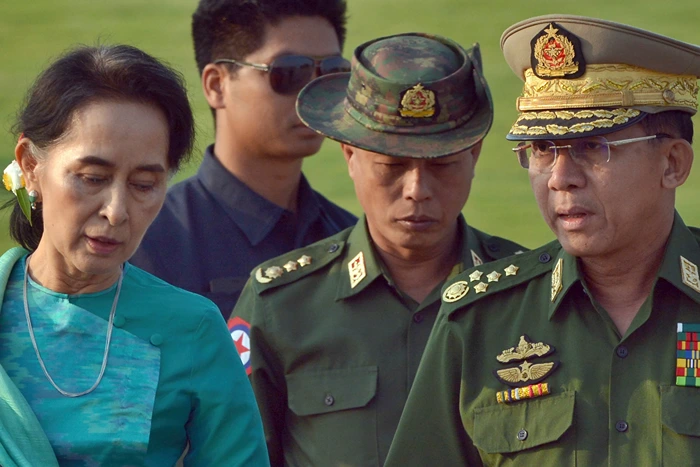
The military coup in Myanmar on February 1, 2021, caught the world by surprise. The military, led by General Min Aung Hlaing, detained and arrested Aung San Suu Kyi, the leader of the National League for Democracy (NLD) party, and other high-ranking government officials. The military justified the coup by claiming election fraud in the November 2020 elections. However, the coup was widely seen as a power grab by the military and a setback for Myanmar's transition to democracy.
Source: Al Jazeera
The relationship between Aung San Suu Kyi and the military regime has been tumultuous, to say the least. Suu Kyi, a Nobel Peace Prize laureate, was detained and put under house arrest for 15 years by the military junta. She was released in 2010, and her party won a landslide victory in the 2015 elections, marking a new era of hope for democracy in Myanmar. However, despite her international fame and support, Suu Kyi's relationship with the military remained fraught. She was accused of turning a blind eye to the persecution of the Rohingya Muslim minority and faced international condemnation for her handling of the crisis. Nevertheless, she remained popular among the majority of Myanmar's population, who saw her as a symbol of hope for democracy.
Coup D'état Triggers Human Rights Concerns:
Since the coup, the military junta has been accused of multiple human rights violations, including the arbitrary detention of government officials, journalists, and activists. Reports of torture and extrajudicial killings have also been documented. The United Nations High Commissioner for Human Rights stated that at least 70 people have been killed and over 1,000 detained since the coup. The military has restricted internet access, making it difficult for people to communicate and access information, and has imposed curfews in several cities.
The situation for ethnic minorities has been particularly concerning, with the military increasing its crackdown on groups such as the Rohingya and Karen, who have long faced persecution. The coup has further destabilized these groups, resulting in a worsening of the humanitarian crisis in Myanmar.
A Major Setback for Human Rights and Democracy:
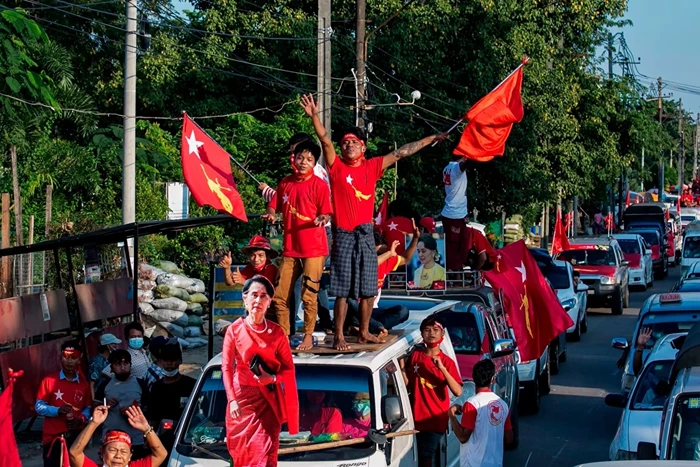
Myanmar has been on a slow path towards democracy since the military dictatorship ended in 2011. Aung San Suu Kyi's National League for Democracy (NLD) won a landslide victory in the 2020 elections, which were deemed free and fair by international observers. The military's refusal to accept the results and subsequent coup have dashed hopes of further democratic progress.
Source: DW News
The military has suspended the constitution, dissolved the parliament, and arrested elected officials, including Aung San Suu Kyi. The coup has been widely condemned by the international community, with many countries imposing sanctions on the military junta. However, the military has remained in control and has promised to hold new elections, although the timeline and conditions for these elections remain unclear.
ASEAN's Biggest Challenge
The coup in Myanmar has raised concerns about regional stability and security. The Association of Southeast Asian Nations (ASEAN) has been monitoring the situation and has called for the restoration of democracy in Myanmar. However, the organization's response has been criticized for its lack of firm action against the military junta.
ASEAN's efforts to resolve the crisis have been undermined by the diversity of its member states' views. While some, such as Indonesia and Malaysia, have been more vocal in their criticism of the coup, others, such as Thailand and Vietnam, have been more cautious in their approach. The differing opinions have made it difficult for ASEAN to take a unified stance on the issue.
Moreover, ASEAN's non-interventionist policy towards its members has been a stumbling block in addressing the crisis in Myanmar. This has been the case since the group has been hesitant to criticize the military junta openly. As a result, its response has been limited to calls for dialogue, de-escalation of violence, and the appointment of an ASEAN envoy to facilitate dialogue. Nevertheless, ASEAN remains an essential player in the region, and the international community is closely watching its efforts to resolve the crisis in Myanmar.
China and Russia in a Tight Spot over Myanmar's Coup
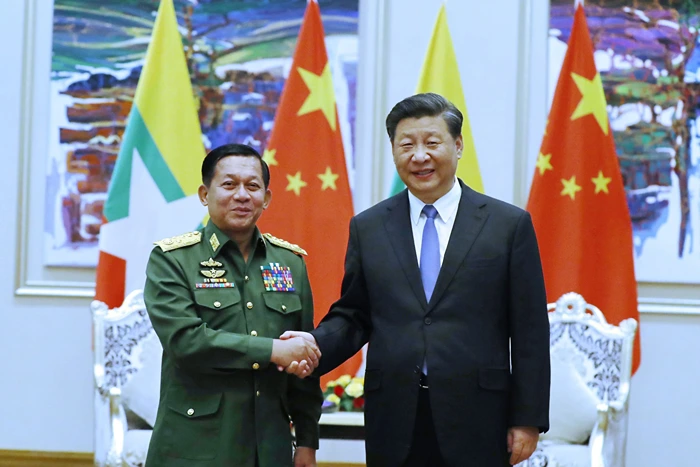
China and Russia's response to Myanmar's coup has been largely focused on preserving their own strategic interests rather than advocating for human rights and democracy. Both countries have deep economic and political ties with Myanmar, and have traditionally been supportive of the military regime.
Source: ICS Research Blog
China, in particular, has a significant stake in Myanmar's economy, with over $20 billion invested in various projects across the country. The Chinese foreign ministry initially described the coup as a "cabinet reshuffle," indicating its reluctance to openly condemn the military takeover. However, China has also been cautious not to openly support the military government, possibly due to concerns over regional backlash.
Similarly, Russia has also taken a measured approach to the coup, urging all parties to "resolve differences within the legal framework." However, the Russian government has not explicitly denounced the military takeover. Russia's primary interest in Myanmar is strategic, as the country provides access to the Indian Ocean and serves as a key market for Russian arms exports.
China and Russia's responses to the coup are driven by their respective national interests. China, for instance, prioritizes maintaining its economic ties with Myanmar, while Russia is focused on securing its strategic interests in the region. The two nations' cautious approach to the coup reflects their concern about any potential negative consequences in the region and on their own national interests.
The World's Response to Myanmar's Military Coup
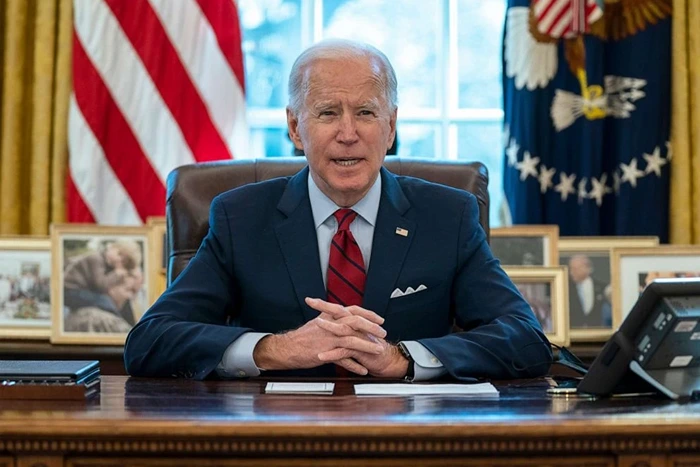
The military coup in Myanmar has been met with widespread condemnation from the international community. The United States, United Kingdom, European Union, and many other countries have all issued statements denouncing the coup and calling for a restoration of democracy.
Source: ABC News
The United States was among the first to speak out against the coup, with President Joe Biden issuing a statement on February 1 condemning the military's actions and calling for the release of detained government officials, including Aung San Suu Kyi. In the days that followed, the U.S. imposed sanctions on several military leaders and their business interests in Myanmar, freezing their assets and restricting their ability to do business with U.S. companies.
Similarly, the United Kingdom condemned the coup and called for the release of all political prisoners, including Aung San Suu Kyi. The UK has also imposed sanctions on several military leaders and organizations in Myanmar, freezing their assets and imposing travel bans on them.
Other countries and international organizations have also condemned the coup and taken action against the military leaders in Myanmar. Canada, for example, has imposed sanctions on nine military officials, while the European Union has also imposed sanctions on military leaders and their businesses.
Japan and South Korea, both significant investors in Myanmar, initially took a cautious approach and refrained from imposing sanctions on the military regime. However, following the escalating violence and human rights abuses by the military, Japan and South Korea also joined the international condemnation of the coup and have announced that they will suspend development assistance to Myanmar.
The international community's response to the coup in Myanmar has been swift and strong, with many countries imposing targeted sanctions on military officials and freezing their assets. The severity of the measures taken reflects the gravity of the situation in Myanmar and the global community's commitment to upholding democracy and human rights.
Conclusion
The coup d'état in Myanmar has resulted in significant political and economic instability in the country. The military's role in the coup highlights the institution's continued desire to maintain its political and economic power in Myanmar. The ongoing unrest has also had significant regional implications, with neighboring countries expressing concern and international condemnation of the coup. China and Russia's response to the coup d'état has been closely watched, with both countries prioritizing their economic and political interests in Myanmar. The international community must continue to put pressure on the military to restore the democratic process and protect human rights in Myanmar.
References
- Al Jazeera. (2021, January 31). Aung San Suu Kyi, ruling party leaders detained in Myanmar. https://www.aljazeera.com/news/2021/1/31/aung-san-suu-kyi-ruling-party-leaders-detained-in-myanmar
- Al Jazeera. (2021, February 16). Myanmar coup: What is happening and why? https://www.aljazeera.com/news/2021/2/12/myanmar-coup-what-is-happening-and-why
- Associated Press. (2021, February 11). US imposes sanctions on Myanmar after military coup. https://apnews.com/article/joe-biden-sanctions-myanmar-coup-f28e6bc37c38417d19a86b524a14de0d
- BBC News. (2021, February 1). Myanmar coup: Aung San Suu Kyi detained as military seizes control. https://www.bbc.com/news/world-asia-55882489
- CNBC. (2021, February 4). Russia, China and other countries silent on Myanmar coup as West threatens sanctions. https://www.cnbc.com/2021/02/04/russia-china-and-other-countries-silent-on-myanmar-coup-as-west-threatens-sanctions.html
- CNN. (2021, February 9). Myanmar coup poses dilemma for China over stability and rights. https://edition.cnn.com/2021/02/09/asia/myanmar-coup-china-russia-intl-hnk/index.html
- Institute of Chinese Studies. (2021, September 8). Seven Months Post Coup: Decoding China's Myanmar Policy. https://icsin.org/blogs/2021/09/08/seven-months-post-coup-decoding-chinas-myanmar-policy/
- Reuters. (2021, February 3). ASEAN divided on how to deal with Myanmar crisis. https://www.reuters.com/article/us-myanmar-politics-asean/asean-divided-on-how-to-deal-with-myanmar-crisis-idUSKBN2A30E5
- The Guardian. (2021, February 4). Myanmar coup: military junta blocks Facebook as protesters mobilize. https://www.theguardian.com/world/2021/feb/04/myanmar-coup-military-junta-blocks-facebook-as-protesters-mobilise
- The Guardian. (2021, February 8). Three-finger salute Hunger Games symbol adopted by Myanmar's protesters. https://www.theguardian.com/world/2021/feb/08/three-finger-salute-hunger-games-symbol-adopted-by-myanmars-protesters
- The Times. (2021, February 8). Burmese protesters raise flowers and three fingers against might of the military junta. https://www.thetimes.co.uk/article/burmese-protesters-raise-flowers-and-three-fingers-against-might-of-the-military-junta-xmbmp0dkd
- United Nations Human Rights. (2021, March 2). Situation of human rights in Myanmar: Report of the United Nations High Commissioner for Human Rights. https://www.ohchr.org/Documents/Countries/MM/A_HRC_46_34_Add-1_EN.pdf
- Voice of America News. (2021, November 11). Aung San Suu Kyi, NLD Win Second Landslide Election in Myanmar. https://www.voanews.com/a/east-asia-pacific_aung-san-suu-kyi-nld-win-second-landslide-election-myanmar/6198393.html



