From Molecule to Market: Rethinking Drug Distribution and Cost
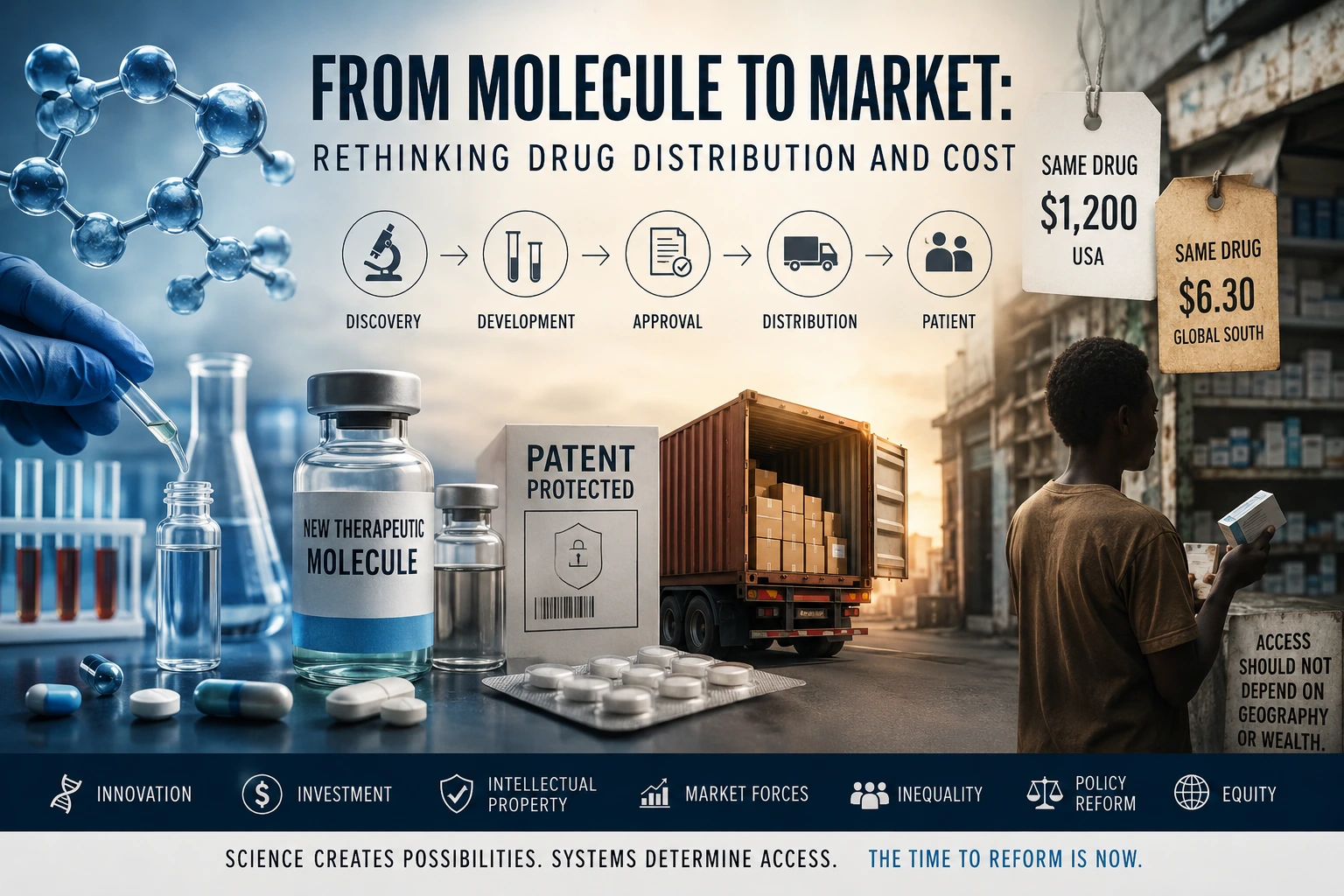
Introduction
Drug prices have been increasing around the world, making it harder for many people to afford the medicines they need. One reason for this is that creating new drugs is very expensive. Pharmaceutical companies spend a lot of money on research, testing, and getting approval from governments. Because of these high costs, companies often set high prices to recover their investment and make a profit.
Access to medicine is also unequal between the Global North and the Global South. Wealthy countries, such as the United States and many European nations, usually have stronger healthcare systems and more resources to pay for expensive treatments. However, many developing countries cannot afford these medicines, which means people there may not get the treatments they need.
This creates a conflict between innovation and access. Companies need money to develop new drugs, but high prices can prevent people from getting them. This leads to an important question: should medicine be treated as a product that companies sell for profit, or should it be considered a public good that everyone should be able to access?
2. The “Molecule” Stage – Drug Discovery & Development
Before a medicine reaches patients, it goes through a long and expensive process called drug discovery and development.
A. Research & Discovery
The first step is basic scientific research. Scientists study diseases and look for molecules that might be able to treat them. A lot of this early research is publicly funded, meaning it is paid for by taxpayers through government programs. Universities and small biotech startups often do this work in laboratories. For example, institutions like the National Institutes of Health provide large amounts of funding for medical research that helps scientists discover possible new drugs.
B. Clinical Trials
After scientists find a promising drug, it must be tested on people in clinical trials. These trials usually happen in three phases. Phase I tests if the drug is safe for humans. Phase II checks if it works and looks for side effects. Phase III involves many more patients to confirm the drug’s effectiveness and safety. Clinical trials are extremely expensive and risky because many drugs fail during this process.
C. Regulatory Approval
If the clinical trials are successful, the company must ask for approval from government agencies before selling the drug. In the United States, drugs are reviewed by the U.S. Food and Drug Administration. In Europe, they are reviewed by the European Medicines Agency. These agencies check the safety and effectiveness of the drug before allowing it to be used by the public.
Key Critical Question
A major debate in healthcare is this: if taxpayers help fund the early research that leads to new medicines, why are the final drug prices often so high? This question raises concerns about fairness, profits, and access to healthcare.
What really makes drugs expensive?
1. R&D Costs (real vs. inflated estimates)
Pharmaceutical companies such as Pfizer and Johnson & Johnson argue that drug development is extremely expensive, often citing figures in the billions due to long timelines, complex clinical trials, and high failure rates. However, critics question these numbers, noting that they often include opportunity costs and overlook substantial public funding in early research stages. Independent analyses suggest the true out-of-pocket cost may be significantly lower, making R&D a real but sometimes overstated justification for high drug prices.
2. Patent Protection & Market Exclusivity
The 20-year patent system grants drug companies’ temporary monopolies, allowing them to sell new medications without competition for several years after approval. In practice, effective exclusivity is shorter due to development time, but still long enough to enable companies to set high prices based on demand rather than production cost. Firms often extend this period through strategies like minor modifications or additional patents, reinforcing monopoly pricing and making exclusivity one of the biggest drivers of expensive drugs.
3. Marketing & Administrative Costs
Beyond research, companies like Pfizer and Johnson & Johnson spend heavily on marketing and administration. This includes direct-to-consumer advertising in the U.S., large sales forces targeting doctors, and significant lobbying efforts. While these activities help maximize sales and influence policy, they do not directly improve the drug itself, yet their costs are built into pricing, further increasing what patients ultimately pay.
The Role of Governments & Public Policy
1. Price Regulation
Governments play a major role in controlling drug prices. In many European countries, the government negotiates directly with drug companies to decide a fair price before the drug is sold. They also compare prices with other countries and check if the drug is worth its cost. In contrast, the United States has traditionally allowed higher prices, but recent reforms now let Medicare negotiate prices for some expensive drugs. These policies help make medicines more affordable, but stricter regulation can sometimes slow down the release of new drugs.
2. Generic Competition
Generic drugs are cheaper versions of brand-name drugs that appear after patents expire. They are very important because they create competition and can reduce prices by up to 80–90%. However, global rules under the World Trade Organization and its TRIPS Agreement protect patents, which can delay generics. While these rules support innovation, they can also make medicines less affordable, especially in poorer countries.
3. Public Manufacturing Models
Some governments produce medicines themselves through state-owned companies. This helps ensure a steady supply of important drugs and can lower costs. However, these public systems may not be as efficient or innovative as private companies. In South Korea, instead of making drugs directly, the government focuses on strict price regulation and national health insurance to keep medicines affordable. This shows that different countries use different strategies to balance cost, access, and innovation.
1. Patent Reform
One possible solution is modifying the patent system. Governments could shorten the period of exclusivity that companies receive for new drugs. Another approach is compulsory licensing, which allows governments to authorize other manufacturers to produce a drug during public health emergencies.
2. Public-Private Hybrid Models
Many medicines are developed with government funding or university research. Under a public-private hybrid model, governments would retain partial ownership of drugs that received public funding. This could allow governments to influence pricing and ensure wider access.
3. Cost Transparency Laws
Another reform would require pharmaceutical companies to disclose the actual costs of research, development, and production. Greater transparency would help governments and healthcare systems negotiate fairer drug prices.
4. Regional Drug Manufacturing
Increasing pharmaceutical manufacturing in different regions of the world could also improve access to medicine. Developing stronger supply chains within each continent would reduce dependence on imports and allow faster responses during health crises.
Conclusion
In conclusion, the high cost of drugs results from a combination of research and development expenses, patent protections, and business practices, but it is also influenced by public funding and government policies. This creates a difficult balance between encouraging innovation and ensuring that people can afford the medicines they need. While wealthier countries are better able to handle high prices, many developing nations face serious challenges in access, highlighting global inequality in healthcare. Solutions such as patent reform, stronger generic competition, and greater cost transparency show that change is possible. Ultimately, medicines should not be treated only as profit-driven products, but as essential goods that require a fair system to ensure both continued innovation and equal access for all.
References
- World Health Organization (WHO) Reports
- WHO publishes global health reports and databases that track healthcare systems, disease trends, and access to medicines worldwide. Their Global Health Expenditure Database provides comparable data on how much countries spend on healthcare and how resources are distributed.
- World Bank Health Expenditure Data
- The World Bank collects international data on health spending, including healthcare costs per person and spending as a percentage of GDP. This data helps researchers compare how different countries finance healthcare systems and how spending relates to economic development.
- Organization for Economic Co‑operation and Development (OECD) Pharmaceutical Pricing Reports
- OECD reports analyze the cost of medicines, pharmaceutical spending, and policies used by governments to control drug prices. These reports show trends in prescription drug spending and how countries manage pharmaceutical markets.
- Kaiser Family Foundation (KFF)
- KFF provides detailed research and statistics about healthcare costs, insurance coverage, and prescription drug pricing. Their reports and charts are widely used in academic research and policy discussions.
- Centers for Disease Control and Prevention (CDC)
- The CDC offers extensive health data on diseases, healthcare access, and public health trends. Their databases help researchers understand how health outcomes relate to healthcare systems and policies.
- National Institutes of Health (NIH)
- NIH funds and publishes large amounts of medical research, including studies on drug development and healthcare innovation. Their resources can help explain how medical research and pharmaceutical companies interact.
- PubMed
- PubMed is a database containing millions of peer-reviewed medical and scientific research articles. It is useful for finding academic studies about healthcare costs, patents, and drug development.



