From an International Student's Perspective Water Pollution in India
Introduction
Water, constituting 71% of the Earth, is undeniably one of the most abundant resources on our planet. Yet, only a mere 2.5% of this vast aquatic expanse is suitable for drinking and other essential purposes. This seemingly paltry fraction is scarcely sufficient to quench the thirst and meet the needs of billions of people around the globe. Water is not merely a beverage; it is the lifeblood that courses through our bodies, constituting approximately 70% of our very being. It serves as the cornerstone of countless human activities, from household use to agricultural practices such as irrigation.
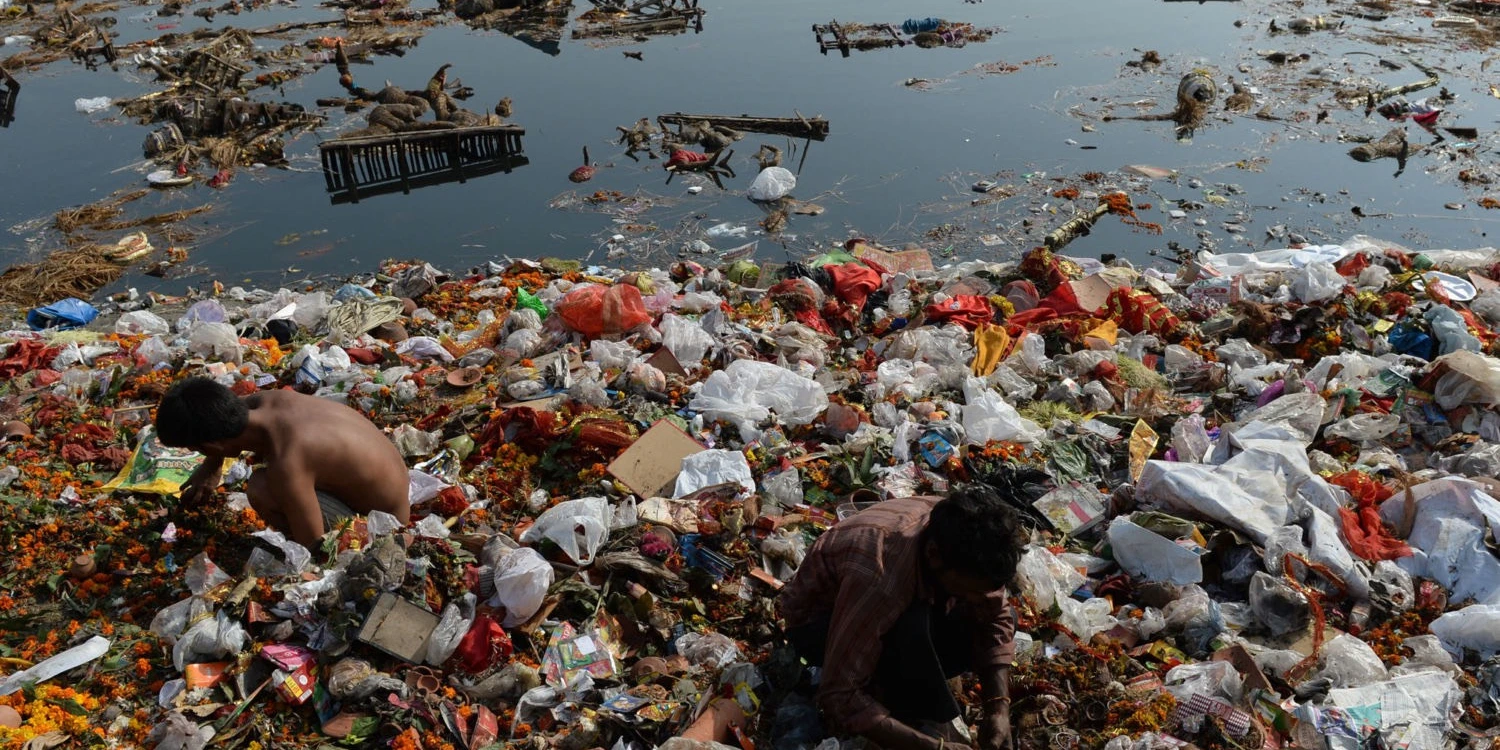
India, with its teeming population of over 1.3 billion, faces a grave challenge concerning the quality of its water resources. It is a nation where the timeless flow of rivers, like the Ganges, coexists with the bustling energy of megacities, and where the agricultural heartlands stretch far. However, the country is increasingly marred by the persistent threat of water pollution, a problem that has profound implications for the well-being of both the people and the environment.
Cause
1) Industrial Discharges
The release of untreated or poorly treated industrial effluents into water bodies is a major cause of water pollution, introducing chemicals, heavy metals, and toxins from various industries that contaminate water sources.
Industrial wastewater, stemming from sectors such as iron, cement, paper, plastic, sugar mills, slaughterhouses, dye-making industries, and distilleries, contributes significantly to water pollution. The Raipur area in central India hosts a multitude of iron and cement industries due to the abundant availability of raw materials. Raipur, known as the largest steel market in India, houses steel, coal, power, cement, and rice milling industries. Approximately 500 medium and large-scale industries are operational in sectors like Siltara and Urla, while other industries are located in areas such as Bhilai, Jamul, and Durg.
Notably, the Bhilai Steel Plant (BSP), one of Asia's largest steel plants, has a massive capacity and comprises numerous manufacturing units such as coke ovens, sintering plants, blast furnaces, steel melting shops, rolling mills, and more. Unfortunately, the unchecked dumping of industrial waste from these sectors, including the sugar mills, slaughterhouses, paper mills, dye-making industries, and distilleries, has contaminated nearby rivers, effectively turning them into conduits for sewage. This industrial waste has also seeped into the groundwater, further exacerbating the pollution crisis in the region.
2) Agriculture Runoff
The excessive use of fertilizers, pesticides, and herbicides in agriculture significantly contributes to water pollution, leading to runoff carrying these pollutants into rivers and lakes. This excessive use results in nutrient pollution and harmful algal blooms, impacting both surface water and groundwater.
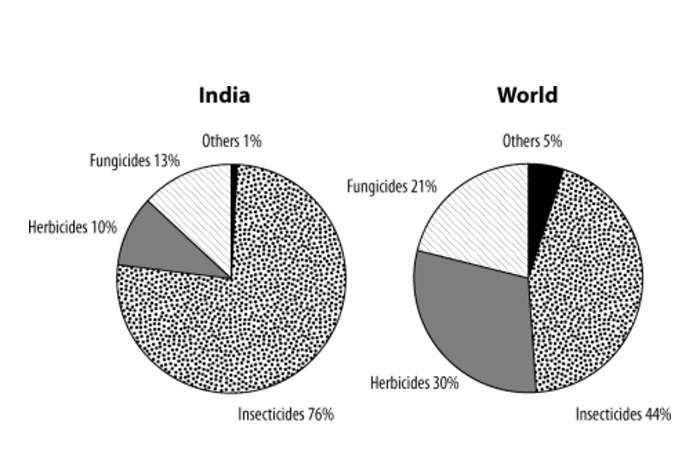
Pesticide: India’s extensive usage of pesticides, notably in crops like cotton, paddy, and wheat, has raised concerns globally. Surface water contamination arises as pesticides leach through the soil from treat plants, contributing to poor water quality. The report on water quality in India identifies a significant number of polluted river stretches, notably in Maharashtra. The high use of pesticides is a primary cause of groundwater contamination, notably through the presence of nitrates and other chemicals that accumulate based on soil nitrogen levels and the vulnerability of aquifers to leaching.
Fertilizer: The Indian fertilizer industry's performance in terms of water usage and pollution is unsatisfactory. It was determined that around one-third of the land surrounding the fertilizer plant had extremely high nitrogen concentrations in the groundwater. The reason for this was that fertilizer plants are required to recycle the water they consume. The fertilizer company uses water for horticulture or to water other crops on its premises, resulting in nitrogen seepage.
Rivers, streams, lakes, ponds, wells, and other bodies of water are tapped for domestic and industrial use in India's metropolitan centers. Water used in the home loses more than 80% of its volume as effluent. Most of the time, this effluent is released untreated into the environment, resulting in considerable water pollution.
3) Urbanization and Construction
Rapid urbanization in India has resulted in a number of environmental challenges, including water supply, wastewater generation, and trash collection, treatment, and disposal. Many towns and communities established near rivers have not given wastewater, sewerage, and other issues adequate thought. First, some of it seeps into the ground and contaminates the water underneath. In Class-I cities (cities with a population of more than one lakh), wastewater production can reach 16,662 MLD (million liters per day). In class-I cities, sewage treatment facilities are provided to around 70% of the population. Second, according to the most recent estimate, only 6,000 MLD (or around 26%) of the 23,000 MLD of wastewater produced is treated before discharge; the remainder is discarded untreated. Treatment levels in cities with operational sewage treatment facilities range from 2.5% to 89% of produced sewage.
Effects
1) Health Impact
Contaminated water in India can have a detrimental impact on public health. It can lead to diseases such as cholera, typhoid, and gastrointestinal disorders. There have been instances of waterborne disease outbreaks in India, resulting in severe consequences for affected communities. One example of a waterborne disease outbreak in India is the cholera outbreak in 1992. It affected thousands of people, leading to widespread illness and unfortunately, several deaths. One recent example of the effect of water pollution on people's health in India is the contamination of the Yamuna River. The Yamuna River, which flows through Delhi, has been heavily polluted due to industrial waste and untreated sewage. This has led to an increase in waterborne diseases and health issues among the local population. It highlights the urgent need for effective measures to address water pollution and protect public health in India.
2) Eutrophication
Fish deaths in freshwater bodies such as rivers, lakes, and ponds are not uncommon in India. India continues to receive reports of mass fish deaths from various parts of the country, such as the recent one in Krushnale Lake in Panvel, Maharashtra, or in Mumbai, where hundreds of fish were discovered dead and floating in the Banganga tank at Walkeshwar, or in a pond in Vishakapatnam, Bengaluru's Mottanalluru lake, a pond in Guwahati, or a lake in Kolkata.
Bacteria and some single-celled plants are examples of phytoplankton, which are microscopic organisms that live in both salty and freshwater. Cyanobacteria, diatoms, organisms like dinoflagellates, green algae, and one-celled plants like coccolithophores are all examples of phytoplankton.
Phytoplankton survival and growth are dependent on the availability of nutrients in the water such as nitrates, phosphates, silicates, and calcium. Some phytoplankton can fix nitrogen and grow in areas with low nitrate concentrations. They must also have trace amounts of iron. Water temperature and salinity, water depth, wind, and the type of predators grazing on them are all factors that influence phytoplankton growth.
Phytoplankton are the foundation of the aquatic food web because they act as primary producers and provide food for everything from microscopic animal-like zooplankton to large animals like whales. Small fish and invertebrates graze on phytoplankton, and larger animals eat these smaller animals.
When water bodies become polluted, phytoplankton can cause disease and death. When the availability of nutrients such as nitrogen and phosphate in water bodies exceeds normal limits, phytoplankton such as algae and cyanobacteria can quickly grow out of control and bloom when the water is warm and slow moving and there is an adequate amount of sunlight and carbon dioxide. Eutrophication is the term used to describe this process.
Certain phytoplankton species produce powerful biotoxins, resulting in harmful algal blooms that can harm aquatic animals. Dead phytoplankton sink to the ocean or lake floor after massive blooms. The bacteria that decompose phytoplankton deplete the oxygen in the water, suffocating aquatic animals and resulting in an oxygen-depleted dead zone.
Algal blooms also reduce light penetration, slow growth, and kill plants near the shores of bodies of water (littoral zones), and impair the ability of organisms living in the water to access food.
Algal blooms are common in inland waters, according to Rajendra Prasad and Samendra Prasad (2019) in their paper, including Udaisagar Lake in Rajasthan, Dal Lake in Jammu and Kashmir, Upper Lake (Bhojtal) in Bhopal, Madhya Pradesh, Chilika Lake in Odisha, and the River Ganges at Varanasi.
According to research conducted in India, the majority of algal blooms are caused by high levels of phosphorus in water derived from agricultural runoff, fossil-fuel combustion, wastewater, and detergents.
3) Economic harm
The consequences of water pollution in India are far-reaching and sobering. According to the World Bank, pollution released upstream significantly hinders economic growth downstream, potentially reducing GDP growth in those areas by up to a third. In middle-income countries like India, where water pollution is a more severe issue, the impact could escalate to nearly a 50% reduction in GDP growth.
This issue extends to India’s agricultural sector, a crucial component of its economy. Areas downstream of polluted segments in India experience “a 9% reduction in agricultural revenues and a 16% drop in downstream agricultural yields.” Such declines in agricultural productivity have far-reaching consequences for food security and livelihoods.
Furthermore, the environmental degradation cost in India is substantial, estimated at INR 3.75 trillion, or roughly $80 billion, annually. Health costs due to water pollution are estimated to be between INR 470 billion and 670 billion, or approximately $6.7 billion to $8.7 billion, per year. These health costs primarily stem from diarrheal mortality and morbidity in children under give, as well as other population health issues. Beyond the economic ramifications, the absence of access to clean water, sanitation, and adequate hygiene leads to the loss of 400,000 lives annually in India.
This bleak scenario comes to life in villages like Gangnauli in western Uttar Pradesh, where residents report a surge in diseases affecting almost every household. Villagers attribute their deteriorating health to the contaminated groundwater they’ve been consuming. Heart-wrenching accounts of children born healthy but experiencing deformities and health issues after consuming this water have become distressingly common. In 2017, the National Green Tribunal (NGT), India’s top environmental court, confirmed that water was the root cause of mass sickness in villages across five districts in Uttar Pradesh. The water was found to contain carcinogenic elements, further exacerbating the health crisis. Families struggling to cover overwhelming medical expenses have been pushed to their limits, shuttling between hospitals due to a lack of adequate healthcare facilities in a state with a population of 204 million.
Availability of Clean Drinking Water:
When it comes to access to safe drinking water, India is in a precarious position. According to a poll performed by LocalCircles, a community social media platform, only 2% of Indian households receive potable grade water from their local body and 65% use some kind of sophisticated filtration technology. When asked to rate the quality of piped water delivered to their residence by the local municipal/water department or panchayat, 5% said "very poor" and 15% stated "poor." Furthermore, 5% indicated they do not have piped water at home. In general, 91 million people (6% of the population) lack access to safe water, whereas 746 million people (54%) lack access to safely managed household sanitation facilities.
Conclusion:
In conclusion, water pollution poses a serious and complex threat to India's population health, social structure, natural resources, and sustainability as a whole. This is a complex subject that needs to be addressed thoroughly and quickly by the government, business community, and general public. Implementing and enforcing strict environmental legislation, making investments in sustainable technologies, and encouraging responsible waste management practices are all necessary to address water contamination. In order to instill in the populace a sense of environmental responsibility, education and awareness efforts are essential. To secure a cleaner, healthier future for India, we must find a balance between environmental preservation and development while we work toward economic growth. It is imperative that action be taken immediately since the effects of ignoring water contamination endanger not only the health of the present generation but also the prosperity of future ones. India can lead the way in creating a more resilient and clean water ecosystem by adopting sustainable practices and cultivating an environmental stewardship culture. This will ensure that water remains a critical resource for the country's ongoing development and prosperity.
References
- https://www.vedantu.com/biology/water-pollution-in-india
- https://aspirecircle.org/wp-content/uploads/2021/04/Assocham_PwC_waste-management-in-india-shifting-gears.pdf
- https://www.aljazeera.com/news/2022/10/21/how-river-pollution-is-killing-people-in-an-indian-village
- https://www.scirp.org/journal/paperinformation.aspx?paperid=62652
- https://www.weforum.org/agenda/2019/10/water-pollution-in-india-data-tech-solution/
- https://www.weforum.org/agenda/2019/10/water-pollution-in-india-data-tech-solution/
- https://water.org/our-impact/where-we-work/india/
- https://www.indiatoday.in/india/story/clean-drinking-water-taps-india-survey-water-borne-diseases-2292481-2022-11-02
- https://www.ripublication.com/ijaes17/ijaesv12n2_05.pdf
- https://www.indiawaterportal.org/articles/water-can-kill