Empowering Hope: Ensuring Rights and Education for Refugees in a New Homeland
Recent Status of Immigration
People and children who traveled hundreds of miles in quest of refuge in the United States came to national notice when the Central American caravan arrived at the southern U.S. border in April 2018. The Trump administration saw this as proof of a pressing border crisis that required a robust response. The administration implemented significant policy changes on asylum and criminal prosecutions and sent thousands of National Guard soldiers to the border. These policy changes limited a person's ability to request asylum to hasten the deportation procedure.
In May 2018, the US government implemented a “zero-tolerance policy” that allowed them to prosecute immigrants crossing the border, including those seeking asylum. This method will enable families to be divided at the border as the U.S. Department of Homeland Security reads parents for prosecution and simultaneously gives custody of the children to the Office of Refugee Resettlement of the U.S. Department of Health and Human Services. In fact, in just 13 days, it is recorded that 658 children were separated from their parents.
The Northern Triangle
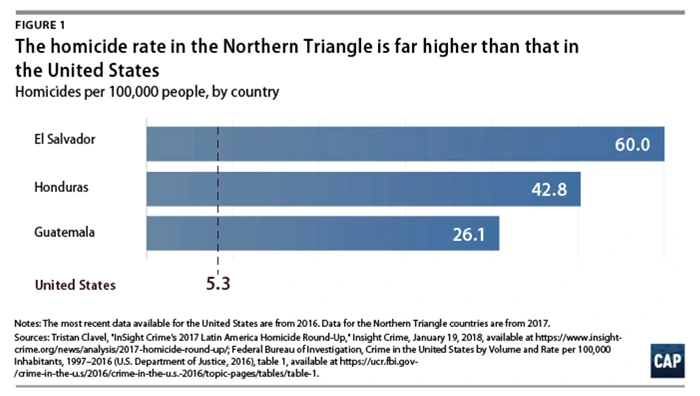
The Northern Triangle in Central America comprises El Salvador, Honduras, and Guatemala. These countries are also the home of a sizable portion of refugees in the US as people leave their homes because of the continuing economic and political instability and widespread violence that originates from gangs. Therefore, many refugees comprise women, children, and people in the LGBTQ community. They must find new homes because being turned away or forcibly deported back to their home countries will lead to more violence and hardships. Sometimes, instead of deportation, immigrants are subjected to criminal prosecution or sentenced to time in American prisons.
Reasons for Seeking Refuge
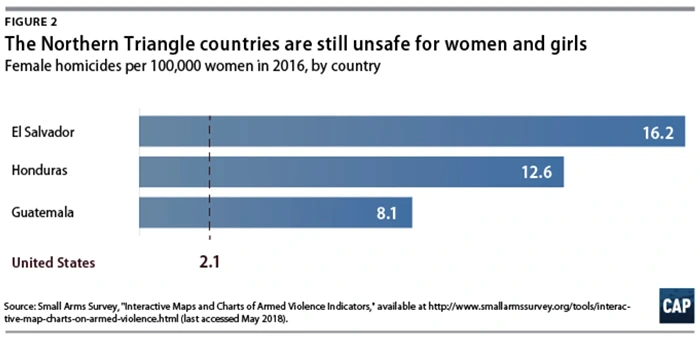
In the Northern Triangle, there is a persistently high level of severe danger caused by gender-based violence, particularly affecting women, children, and LGBTQ individuals. For instance, El Salvador reported 469 femicides, meaning more than nine women and girls were killed weekly in 2017.
Gang members and other perpetrators brutally assault people in the Northern Triangle region, particularly women, children, and LGBTQ persons. Sadly, because of the high rates of impunity and lack of protection in many nations, survivors frequently struggle to obtain justice. Those in the caravan have told disturbing tales, including rape, domestic violence, sex abuse, and significant stress. One illustration is Nelda, a girl who left Honduras with her mother and minor sister to escape her gang-connected, sexually abusive uncle. If they would not drop the police report they had filed against him, he threatened to kill them.
Political Context
Politics and governmental policies have an impact on migration trends. The United States government implemented measures to control the movement of migrants across its borders in March 2020—at the start of the COVID-19 epidemic—leading to restrictions on the entrance. 20 American nations agreed on a roadmap at the Summit of the Americas in Los Angeles. The United States promised to raise its refugee quota from the Americas to 20,000 by 2023 and 2024, with a particular focus on Haitians as part of this agreement, which sought to alleviate the migratory situation in the area. Additionally, the US promised to keep taking in temporary non-agricultural labor from Central America. Thousands of migrants leaving southern Mexico in June 2022 received transit permits and transient documents from Mexican authorities. However, many people were still detained in various places, either taking a break before continuing their journey northward or waiting for financial assistance from their families. Due to the obstacles and obligations associated with the immigration process and the opportunity to move closer to the northern border with the United States, more than 5,000 families asked for protection and preventative measures.
Physical and Mental Health
Moreover, immigrants can be attacked, physically hurt, or sexually assaulted. In the difficult Darien Gap between Colombia and Panama, over 170 incidents of unaccompanied and separated children were reported between January and June 2022. According to the International Organization for Migration's (IOM) Missing Migrants Project, the US-Mexico border alone is responsible for almost 4,000 fatalities, more than all known migration routes. Drowning, which accounts for 1,750 of these fatalities, is the main factor, followed by accidental deaths, car accidents, and poor access to healthcare, which leads to illness, violence, and insufficient access to shelter and food.
Additionally, travelers' mental health is seriously threatened during the migration process. Stress, anxiety, and uncertainty can lead to psychological trauma in both migrant populations and host communities. People who are active in migration face severe risks to their general health due to these situations.
Problems Immigrants Face in the United States
Throughout American history, specific laws and acts have led to severe health risks and challenges for immigrants. For instance, the country enacted state and federal programs to change Mexican immigrants' eating patterns and diets in the 1920s. They believed traditional Mexican foods were not nutritious compared to the American diet, though the campaign caused the immigrants' health to suffer the opposite intentions.
Not only this, but healthcare systems and medical professionals also mistreat immigrants with unfairness. For example, in the past, physicians unlawfully sterilized women. The Illegal Immigration Reform and Immigrant Responsibility Act of 1996 is a prime example of the prejudice and psychological anguish that immigrants experience due to immigration laws. As a result, immigrants have strayed from interacting with government officials, and even those entitled to healthcare services and insurance do not sign up for them.
The tobacco business primarily targets Hispanic communities with its marketing and advertising campaigns. People's decisions to experiment with or use commercial tobacco products are heavily influenced by marketing. Tobacco businesses' advertising campaigns aim to make smoking seem more alluring, increasing the possibility that people will try it for the first time or continue using commercial tobacco products. To do this, tobacco corporations extensively promote Spanish-language cigarettes with names like "Rio" and "Dorado." Additionally, these businesses have given money to important community organizations, colleges, universities, and scholarship programs that aid immigrants.
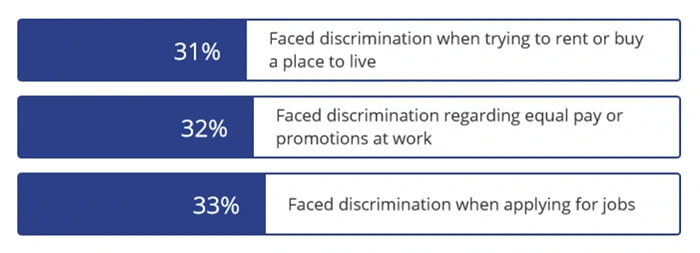
These techniques are hazardous since people are more likely to turn to smoke as a coping mechanism when exposed to various stressors, such as financial hardships, discrimination, or unsafe locations. Immigrants disproportionately represent impoverished Americans because their socioeconomic positions are worse than the general white Americans. The fact that at least one member of every six Hispanic homes has experienced hunger at some point in the past year is remarkable. Additionally, immigrants experience ongoing stress due to racism and prejudice. Nearly one-third of people in the United States say they have experienced discrimination because of ethnicity.
The Efforts Made by Hosting Countries
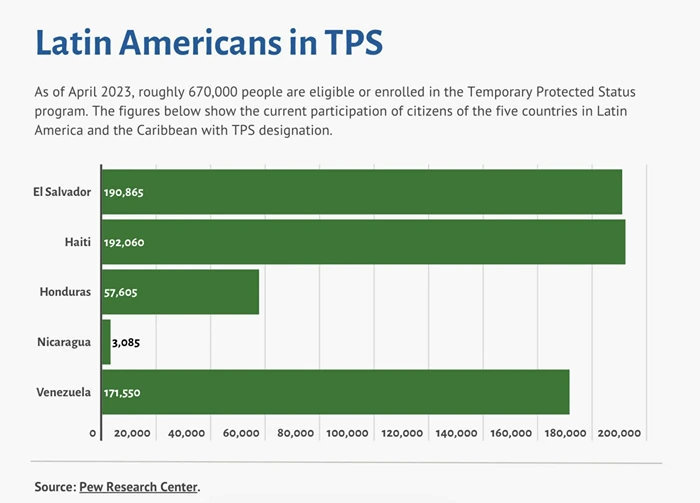
Temporary Protected Status (TPS) is a program that provides residence and work visas to foreign nationals who are currently residing in the United States but cannot safely return to their home country due to circumstances such as natural disasters, armed conflict, or other extraordinary conditions that would jeopardize their lives. The designations for TPS are country-specific and typically last for six, 12, or 18 months, and they are subject to regular renewals. Five out of the 15 countries with TPS designations are in the Americas. These countries include El Salvador, Haiti, Honduras, Nicaragua, and Venezuela.
Many TPS holders have been residing in the United States for extended periods, some even for decades, but they face uncertainty and challenges due to the complex immigration system. They often find themselves in immigration limbo, having to renew their visas regularly and living under the constant threat of the potential suspension of the TPS program.
During the Trump administration, there were efforts to end several TPS designations, including those for El Salvador, Haiti, and Nicaragua. However, these attempts were halted by a 2018 lawsuit, which allowed the TPS programs to remain active while an appeals process unfolded. In 2021, a Supreme Court decision ruled that TPS holders who entered the country without authorization would not be eligible for permanent residence or green cards through the TPS program. Nevertheless, in July 2022, the U.S. Citizenship and Immigration Services (USCIS) reinstated a process that enabled certain TPS holders to potentially leave the United States, obtain authorized reentry, and then apply for green cards if they are married to or a parent of a U.S. citizen. This process provided hope for some TPS holders seeking more stable immigration status.
The Backlash from the United States
In January 2023, President Joe Biden made his inaugural visit to the U.S.-Mexico border, triggering debates and criticism regarding the administration's resource management at the southern border. This visit occurred shortly after he unveiled a new and stringent policy, effectively broadening the scope of an immigration program known as Title 42. Interestingly, this move came despite his earlier campaign's promise to terminate the program. Title 42, established to tackle public health and social welfare issues, gives the government authority to take emergency measures, including actions to prevent the spread of infectious diseases. Though this legislation has existed for many years, its widespread application began in March 2020, when then-President Donald Trump's administration utilized it extensively to regulate border crossings, citing heightened COVID-19 precautions as the rationale.
The Trump administration leveraged Title 42 to effectively bypass immigration laws that permitted individuals to seek asylum even after entering the country unlawfully. They adopted a policy of returning these migrants across the border, arguing that detaining them in federal facilities could pose a greater public health risk. However, in response to the implementation of Title 42 and its impact on migrants, the American Civil Liberties Union (ACLU) and immigrant rights groups took legal action to challenge the measure. Their efforts culminated in November 2022 when a federal judge ruled in favor of the ACLU, deeming the use of the standard as "arbitrary and capricious." As a result of the ruling, the judge ordered the Biden administration to conclude the enforcement of Title 42 within five weeks.
The prolonged legal battle surrounding Title 42 was resolved in January 2023 when the Biden administration declared that the COVID-19 public health emergency would conclude on May 11, 2023. Consequently, Title 42 was also scheduled to be terminated on that date. With the end of Title 42, the U.S. Supreme Court canceled the previous arguments planned to debate the measure's legality in February 2023.
Rights of Immigrants in the United States
While the Constitution does not grant foreigners the right to enter the United States, it does, however, safeguard them from racial and national origin discrimination and protection from arbitrary actions by the government once they are within the country. Immigrants contribute through work and tax payments; legal immigrants are even subject to potential military service through the draft. Many immigrants have resided in the nation for extended periods, having married U.S. citizens and raising their U.S.-born children. Laws that penalize these individuals infringe upon their essential entitlement to equitable and unbiased treatment.
Immigrants possess specific rights when confronted by law enforcement regarding their immigration status. They retain the right to remain silent and are not obligated to disclose information regarding their immigration or citizenship status to police officers, immigration agents, or other authorities. It's important to note that anything they admit to an officer can be used against them in immigration court. Furthermore, if an immigration agent requests permission to search, immigrants can decline. Agents are not authorized to search them or their belongings without their consent or probable cause.
Rights of Immigrants in Europe
Alarming patterns are emerging in treating asylum seekers, refugees, and irregular migrants across Europe. Many European countries have intensified their border patrols to discourage migrant entry into their territories. Those who manage to enter irregularly often face criminalization, incarceration in prison-like conditions, and expedited expulsions, even to places where they may encounter persecution or torture. Therefore, it is crucial to recognize that irregular migration is not a crime and uphold international law granting certain rights to irregular migrants.
In the pursuit of combating fraudulent asylum claims, some states inadvertently undermine the rights of genuine asylum seekers. These individuals are frequently detained and denied access to fair and efficient asylum procedures. Consequently, Europe collaborates with and offers guidance to member states to enhance the protection of migrants' human rights. The focus is ensuring undocumented migrants and their children access essential healthcare and education. Furthermore, their right to protection against arbitrary detention is emphasized, along with the request not to be sent to countries where they may face ill-treatment or torture.
A particularly vulnerable group in Europe today is migrant children, who often suffer from inadequate access to primary healthcare and education. They are also at risk of exploitation by traffickers or smugglers. Addressing these issues and safeguarding the human rights of all migrants are pressing concerns that require immediate attention.
Rights of Immigrants in South Korea
South Korea has faced significant demographic challenges in the last twenty years, leading to policy reforms promoting inbound immigration. Since 1984, South Korea has grappled with a declining fertility rate that consistently remains below the critical population replacement level of 2.1 children per woman. This alarming trend reached its nadir in 2020 when the fertility rate plummeted to an unprecedented 0.84, making it the lowest figure recorded worldwide that year. Consequently, South Korea experienced a significant demographic shift, as the number of deaths surpassed the number of births, resulting in the country's first population decline on record.
The South Korean government has adopted multiple approaches to tackle the looming demographic crisis and the increasing labor shortages. Financial incentives have been introduced to support expecting couples, and subsidies have been provided for childcare and eldercare to promote family planning and support working parents. Long-term care insurance has also been implemented to address the aging population's needs.
However, the most significant and daring efforts to address the labor shortages and demographic challenges have been in immigration policy. 2004, South Korea launched the Employment Permit System, a formal guest worker program. This move came after years of pressure and called for stricter regulations in response to the practice of recruiting informal foreign labor. Before the implementation of this system, the country's borders had remained officially closed to unskilled immigrants.
The Employment Permit System marked a substantial shift in South Korea's approach to immigration, allowing the nation to address its labor needs while balancing the demographic imbalances arising from the declining birth rates and an aging population. These initiatives reflect the government's recognition of the importance of immigration as a potential solution to mitigate the impact of demographic challenges and sustain economic growth.
In response to the depopulation of rural areas in South Korea and the scarcity of marriage prospects for unmarried male residents, local governments and agricultural associations took steps to address the so-called "bride famine." They initiated arranged marriage meetings between these available men and potential spouses. The candidates for marriage were recruited from various sources over time, reflecting the changing dynamics of the country's immigration policies.
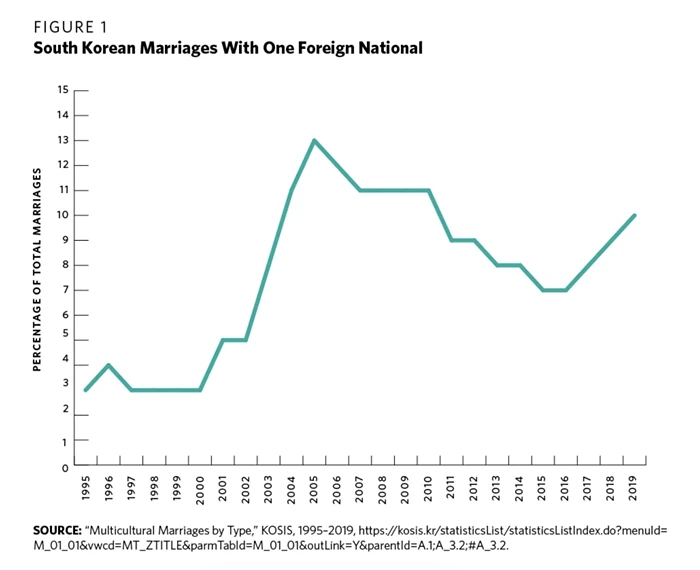
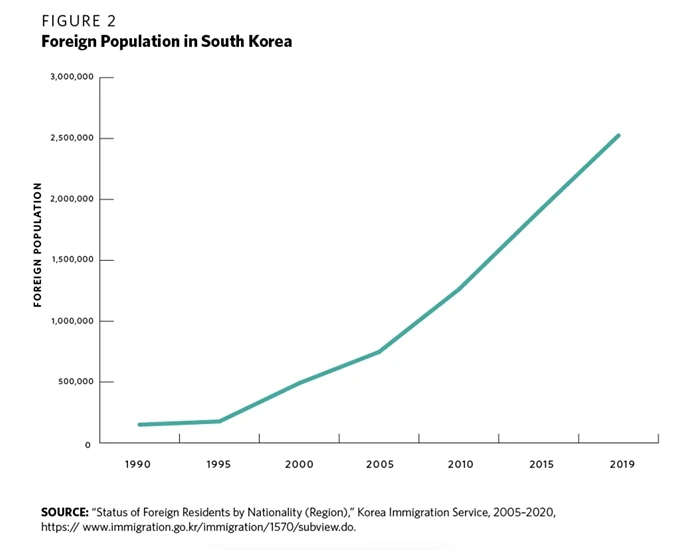
The impact of these efforts was notable, as international marriages in South Korea surged, reaching a peak of 13.5 percent of all marriages in the country by 2005 (see Figure 1). The influx of marriage migrants contributed to a substantial increase in South Korea's foreign population, which grew around fourteen-fold from less than 180,000 in 1995 to over 2.5 million in 2019 (see Figure 2).
Indeed, the initiatives and policy changes in South Korea have brought about significant opportunities, transforming the country's approach to immigration and citizenship. Between 2004 and 2010, South Korea implemented a series of comprehensive immigration and citizenship reforms that had far-reaching effects.
Conclusion
As global, political, and public conversations increasingly focus on international migration, it becomes crucial to understand the individuals at the heart of these discussions. An immigrant is an individual residing in a country other than their birthplace. Whether this individual has acquired the host country's citizenship, participated in its armed forces, wed a native resident, or holds any other standing, they will consistently be recognized as an international immigrant. However, while they are “immigrants” by definition, they are also people and citizens of the world like any other. Therefore, accepting and treating them as equals is only just and fair. The principles of inclusivity and equality should be upheld across borders and origins to embrace the world’s diversity and create stronger, more compassionate communities. Everyone deserves to live in a world that values every individual, regardless of their place of birth.