Chinese-American Relations and the Influence on Students Pursuing Study Abroad Opportunities
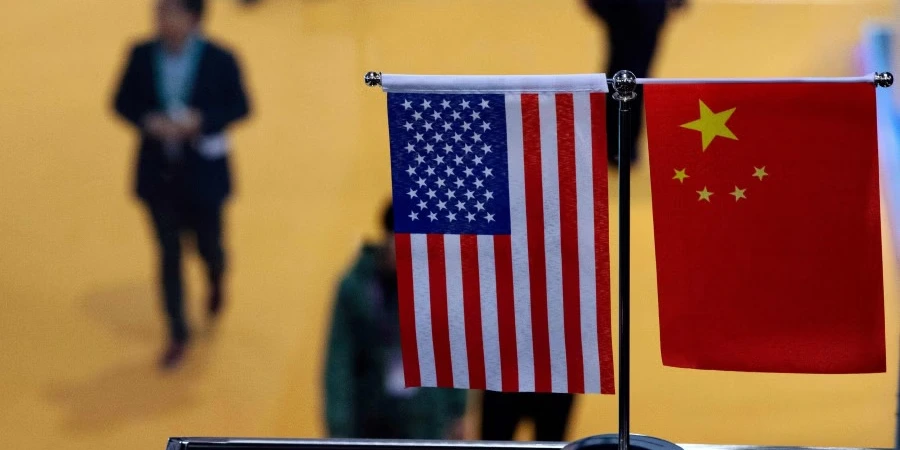
Historical Background
Over two centuries have passed since the beginning of the rich and complicated history of Chinese-American ties. Trade interests were the main driving force behind the start of formal relations between China and the United States in the late 18th century. An important first step was taken in 1844 with the Treaty of Wanghia, which formalized diplomatic ties and made the United States the "most favored nation" in commerce with China. But in the late 19th and early 20th centuries, problems like the Boxer Rebellion, the Open Door Policy, and immigration laws that specifically targeted Chinese citizens led to difficulties.
When the People's Republic of China was established in 1949, Chinese-American ties underwent a dramatic change in the middle of the 20th century. The Chinese Civil War had come to an end, with Mao Zedong's Communist troops emerging victorious. The US and the newly formed PRC were embroiled in a Cold War rivalry because of the US's prior support of the Nationalists. Relations were further strained during the Korean War from 1950 to 1953, as China and the US supported opposite sides.
Diplomatic isolation lasted until the early 1970s, when a historic breakthrough in ties was marked by U.S. President Richard Nixon's historic visit to China in 1972. Nixon's tour to China resulted in the Shanghai Communique, which recognized the existence of a single China and opened the door for improved ties between the two countries. Growing economic relations were observed in the next decades, and in 2001, China became a member of the World Trade Organization.
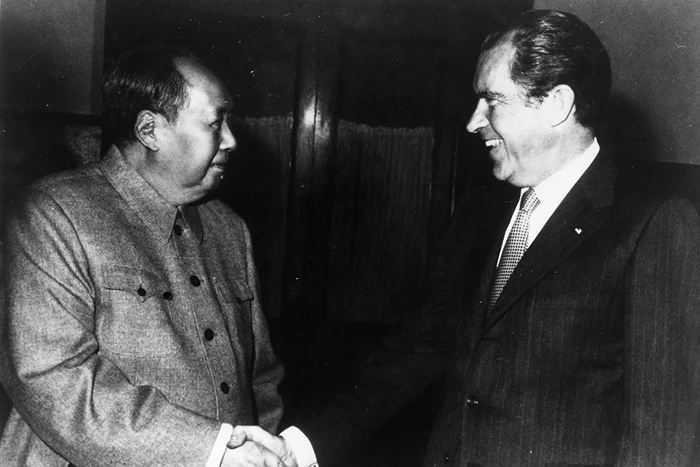
(Mao and Nixon shakes hand during Nixon’s visit to China)
Academic Collaboration
China and the US have placed more emphasis on their educational ties in recent years as they both understand how important it is for people to work together internationally in the field of education. These interactions take many different forms, ranging from official agreements to student exchanges and university-level partnerships.
The 2010-established US-China Consultation on People-to-People Exchange (CPE) is one significant agreement between China and the US. Among other topics covered in this high-level conversation are education, culture, science, and technology. By means of the CPE, both nations have endeavored to expand their educational collaboration by means of programs like academic conferences, collaborative research projects, and exchanges of students and scholars.
Even though China and the US have achieved great progress in their educational collaborations, there are still issues, especially when it comes to political unrest, academic freedom, and intellectual property rights. Nonetheless, continued communication and engagement in the sphere of education continue to foster collaboration and mutual understanding between governments and educational institutions on both sides. Collaboration between China and the US will probably always be crucial for promoting innovation, information sharing, and cultural enrichment as globalization continues to reshape the face of higher education.
Political and Economic Impact
International students are significantly impacted by political and economic aspects of Chinese-American ties, particularly as it pertains to commercial relations, diplomatic advancements, and visa regulations. Changes in visa policies during tense times might make it more difficult for Chinese students to study in the US, perhaps upsetting their academic paths. Similar to this, changes in commercial relations between the two countries may have an influence on the cost of studying abroad, including tuition costs, as well as career prospects after graduation. Additionally, initiatives that encourage cultural interaction may be halted or canceled as a result of diplomatic difficulties, which would reduce the chances for students to collaborate and learn across cultural boundaries.
International students must navigate these difficulties while balancing economic uncertainty and geopolitical instability. Diplomatic tensions may obstruct chances for academic and cultural interchange, while commercial disagreements and visa restrictions may create barriers to educational mobility. In order to create an atmosphere that is favorable to foreign education and allow students to pursue their academic aspirations without being excessively impacted by political or economic volatility, it is imperative that China and the US maintain stable and cooperative ties.
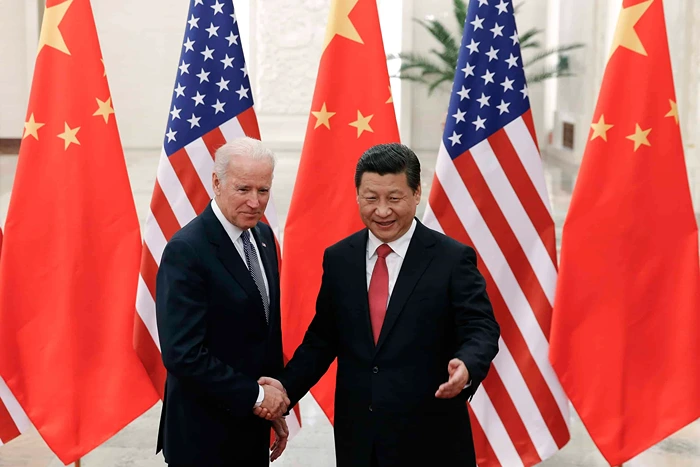
(Biden and XI shakes hand during a summit)
Cultural Exchange
Diplomatic relations between the US and China intricately impact cultural exchange programs, language learning initiatives, and cross-cultural understanding, with the nuances of these interactions reflecting the state of bilateral ties. In times of amicable diplomatic relations, diverse cultural exchange programs thrive, ranging from student exchanges to collaborative artistic endeavors, fostering a rich tapestry of mutual appreciation and understanding. Additionally, supported by positive diplomatic ties, language learning initiatives flourish, bolstering bilingualism and enhancing cross-cultural communication skills among participants. Furthermore, the atmosphere of diplomatic goodwill encourages genuine curiosity about each other's cultures, leading to deeper cross-cultural understanding and stronger interpersonal connections.
Conversely, during periods of strained diplomatic relations, cultural exchange efforts may face challenges, encountering obstacles such as funding cuts or visa restrictions, hampering the flow of cultural interactions and impeding progress towards bridging cultural divides. Thus, the ebb and flow of diplomatic relations between the US and China profoundly shape the landscape of cultural exchange and cross-cultural understanding, underlining the necessity of fostering constructive engagement and dialogue to nurture enduring cultural ties.
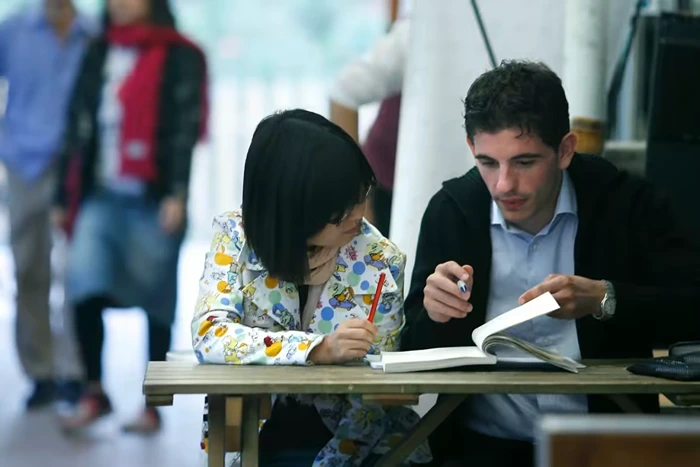
(Students at Beijing Language and Culture University take English classes together)
Challenges
Students studying overseas, especially those from China given the current state of US-China relations, may be greatly impacted by changes in immigration laws and visa regulations. These dynamics are significantly shaped by the diplomatic ties that exist between the US and China. Changes in diplomatic ties may result in changes to visa regulations, which may cause Chinese students' visa applications to be denied outright or to be subject to more stringent scrutiny and lengthier processing delays. Furthermore, during times of tense diplomatic ties, political tensions may be higher, raising questions about the motivations of Chinese students studying in the US and perhaps making visa issues worse for them.
Furthermore, the overall atmosphere of uncertainty created by international tensions may discourage prospective students from pursuing higher education in the US out of fear of discrimination or visa limitations. Therefore, the two nations' diplomatic relationships may have an immediate impact on how simple or complex the immigration and visa procedures are for Chinese students, which may have an effect on their capacity to take advantage of possibilities for foreign education. Thus, keeping steady and cooperative diplomatic ties is crucial to encouraging easier visa procedures and lessening obstacles associated with immigration for students, thereby creating an atmosphere that is more favorable for global academic collaboration.
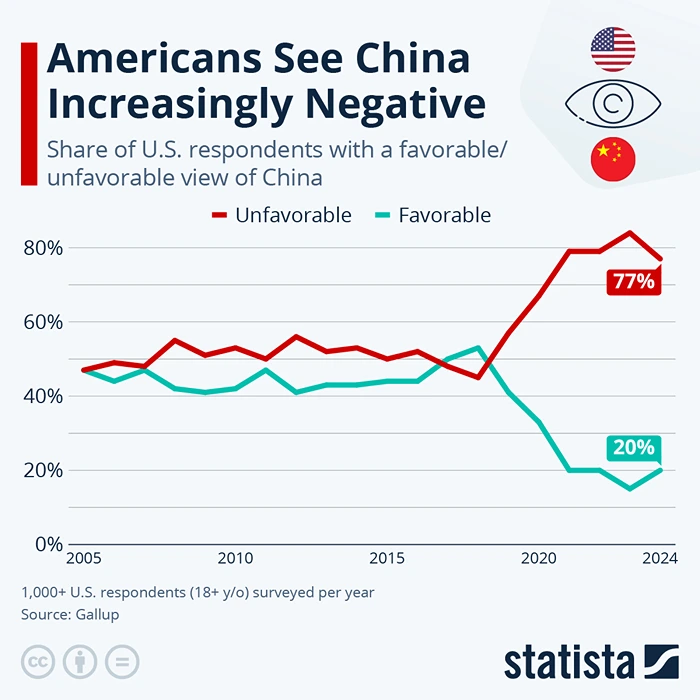
(More Americans sees China negatively)
Decision Making
Diplomatic tensions between nations, like those that exist between the US and China, can have a big impact on students' decisions to study abroad, thereby changing their preferences for study destinations and programmes. Students may reevaluate their study abroad plans if they believe that certain nations are less friendly or safe during times of increased diplomatic tensions. Students may be discouraged from selecting travel places that are entangled in diplomatic disputes or seen as hostile towards their home country due to worries about visa restrictions, discrimination, or political instability. Alternatively, students might choose to go to nations with more solid diplomatic ties and accommodating immigration laws, where they can be sure of a more seamless transfer and a friendlier atmosphere.
Moreover, the programmes that students choose to study in their selected destination country may be impacted by diplomatic tensions. Students may seek out settings where they feel appreciated and accepted regardless of their nationality, and they may gravitate towards organizations or initiatives that promote greater cultural diversity and inclusivity. Furthermore, they might give special attention to initiatives that facilitate intercultural communication and understanding since they see education as a tool for bridging gaps and promoting respect for one another. On the other hand, programmes that are viewed as politically sensitive or controversial may be avoided by students due to diplomatic tensions, since they would rather avoid any potential conflicts or controversies that could negatively impact their academic experience. In general, students' decisions to study abroad are greatly impacted by diplomatic tensions, which mold their preferences for study abroad destinations and programmes in reaction to perceived safety and acceptance as well as geopolitical reality.
Student Experiences
He Yijing, a sophomore at Zhejiang University of Finance and Economics, changed her mind about going to school in the United States after hearing about the University of Chicago shooting death of a Chinese graduate student. Chinese students' enrollment in American institutions has decreased as a result of this tragedy, which brought to light their rising fears about gun violence and civil upheaval in the country. The Institute of International Education's data revealed a notable decline in the number of Chinese students studying in the United States; many chose to pursue their studies in Hong Kong and Singapore instead, perhaps due to worries about safety and the epidemic.
Chinese students' willingness to study in the United States has sharply decreased, according to studies, showing that the American ideal is no longer as alluring as it once was. They've been further discouraged by things like anti-Asian prejudice, worsening Sino-American ties, and laws that specifically target Chinese citizens. U.S. institutions that primarily depend on the tuition payments of international students have seen financial consequences as a result of this change. In the meantime, Chinese students are enrolling in greater numbers in other nations, particularly the UK and Canada, which provide safer and friendlier surroundings.
Policy Recommendation
Careful advice for legislators, academic institutions, and students is crucial to navigating the dynamic terrain of Chinese-American relations and its effects on international education. Maintaining positive and stable diplomatic ties should be a top priority for policymakers in order to create an atmosphere that is favorable to global academic interaction. It is essential to have fair and transparent visa policies that support student mobility while maintaining national security. Transparent communication on regulatory changes can also aid in reducing the uncertainty that overseas students face.
In order to help overseas students overcome these obstacles, educational institutions are essential. Universities can improve their services for overseas students by providing thorough advice on obtaining visas and adjusting to different cultures. Reducing the negative effects of geopolitical tensions on students' experiences can be achieved by establishing welcoming campus cultures that embrace diversity and foster intercultural understanding. In order to give students more possibilities for studying abroad, institutions might also form alliances with colleges in nations with more established diplomatic relationships.
It's critical for students to keep up with global developments and comprehend how they could affect their plans to study abroad. In times of diplomatic uncertainty, flexibility in programme preferences and destination selections can offer workable alternatives. Creating a support system that consists of peers and university resources can help students overcome obstacles and make the most of their study abroad experiences. Policymakers, academic institutions, and students may work together to guarantee that international education is a robust and enriching endeavor even in the face of changing geopolitical environments by implementing these methods.
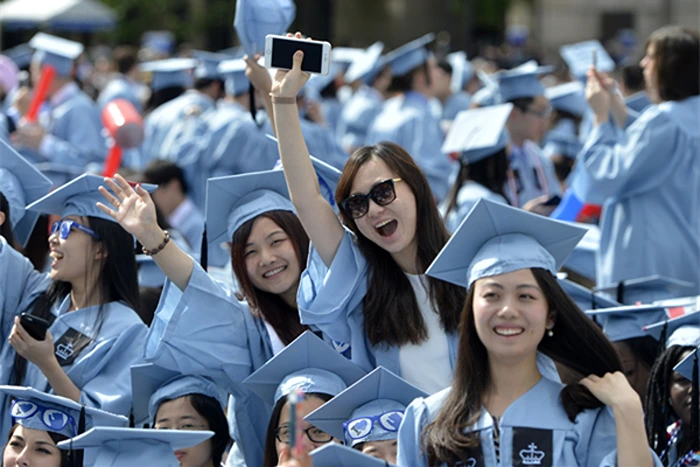
(Chinese international students celebrate Columbia University graduation)
References
- https://foreignpolicy.com/2020/07/24/document-of-the-week-pompeo-buries-u-s-china-engagement-policy/
- https://www.thewirechina.com/2021/01/10/myths-and-realities-in-sino-american-relations/
- https://asia.nikkei.com/Opinion/China-must-not-shut-the-door-to-cultural-exchanges-with-the-U.S
- https://www.statista.com/chart/19023/share-of-the-us-public-with-a-favorable-unfavorable-view-of-china/
- https://global.chinadaily.com.cn/a/201911/22/WS5dd6c738a310cf3e355791e1.html



