AUKUS in 2021: A Historic Alliance Reshaping the Geopolitical Landscape
Introduction
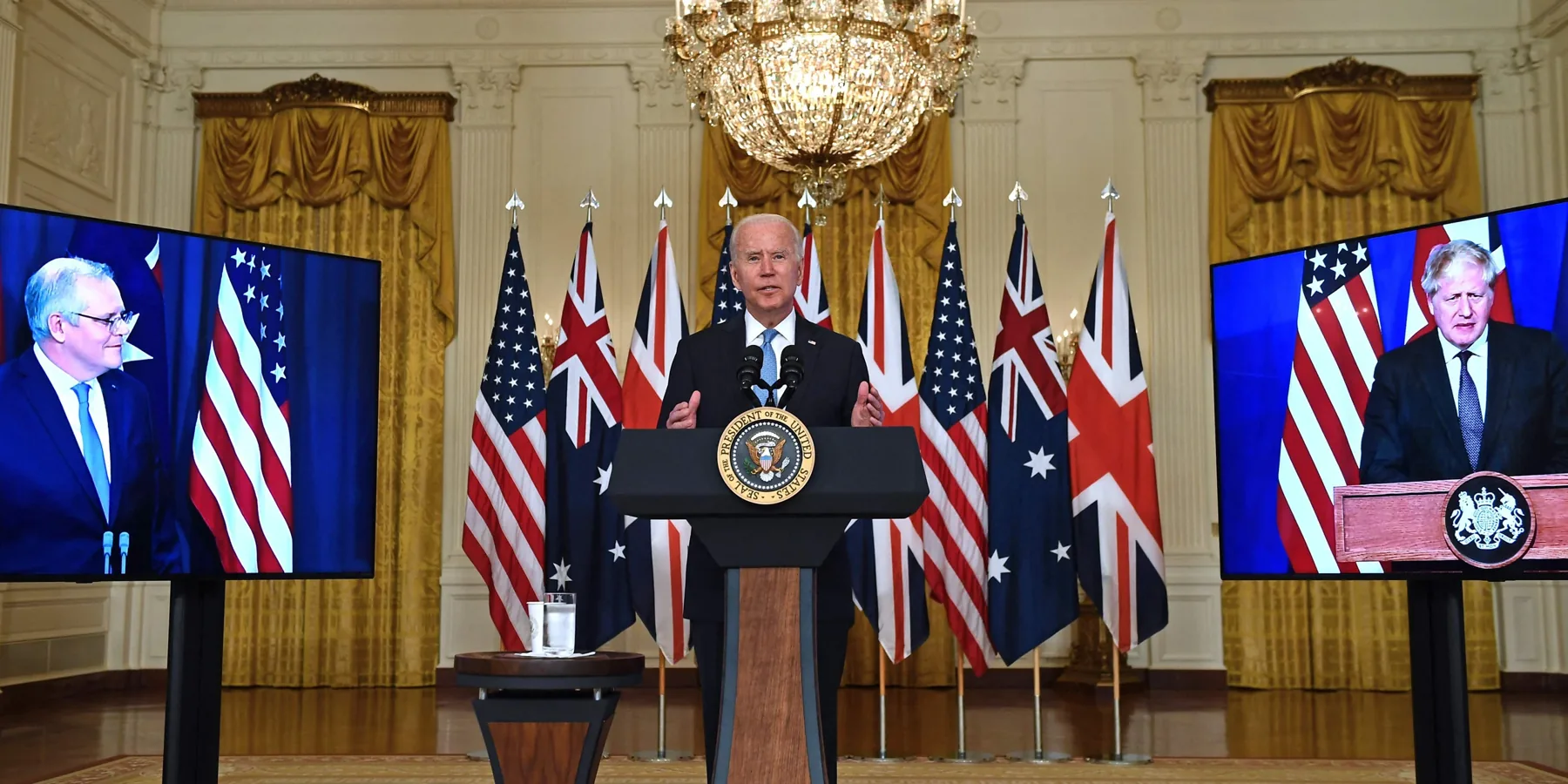
The AUKUS agreement, a security pact between the United States, Australia, and the United Kingdom, has sparked both praise and criticism in the international community. The agreement, which focuses on sharing technology, information, and expertise in the areas of defense and security, has the potential to significantly impact the global balance of power. The AUKUS alliance represents a strategic shift in the Indo-Pacific region, and its objectives and implications are being closely monitored by nations around the world. In this essay, we will analyze the AUKUS agreement and discuss its impact on the global balance of power. We will evaluate the motivations behind the agreement and the potential challenges and opportunities it presents for the participating countries, as well as the implications for other global powers, particularly China. By exploring these issues, we hope to shed light on the significance of the AUKUS agreement for international security and cooperation.
AUKUS Agreement
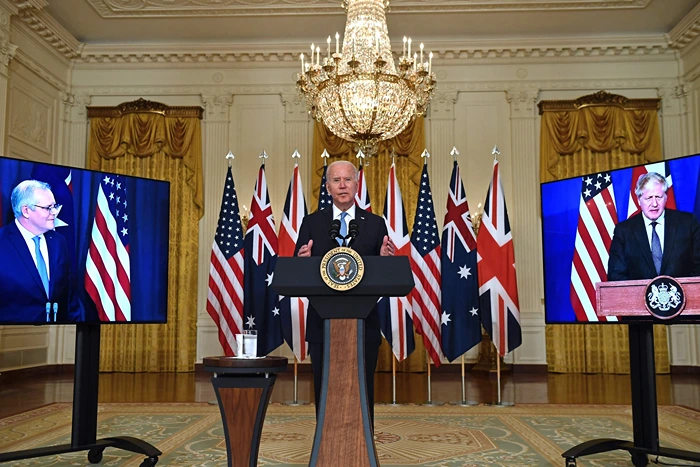
The AUKUS agreement is a trilateral security pact signed on September 15, 2021, between the United States, Australia, and the United Kingdom. The agreement focuses on sharing technology, information, and expertise in the areas of defense and security, with a particular focus on emerging technologies, such as artificial intelligence, cyber, and quantum technologies. The agreement is not a formal military alliance, but rather a security partnership that seeks to enhance the capabilities of the three countries to respond to shared security challenges in the Indo-Pacific region.
Source: BBC News
The key components of the AUKUS agreement include:
- Sharing of technology: The AUKUS agreement seeks to enhance the technological capabilities of the three countries by sharing expertise in areas such as cyber security, artificial intelligence, and quantum technologies. The agreement also includes a plan for Australia to acquire nuclear-powered submarines, which will be designed and built with the assistance of the United States and the United Kingdom.
- Strengthening regional security: The AUKUS agreement aims to strengthen regional security in the Indo-Pacific region by enhancing the military capabilities of Australia, and by working together to address shared security challenges, such as maritime security and cyber threats.
- Strengthening economic ties: The AUKUS agreement includes provisions for strengthening economic ties between the three countries, particularly in the areas of defense industry cooperation and research and development.
The objectives of the AUKUS agreement include:
- Strengthening the security of the Indo-Pacific region: The AUKUS agreement seeks to enhance the security of the Indo-Pacific region by providing Australia with advanced military capabilities and by working together to address shared security challenges.
- Enhancing technological capabilities: The AUKUS agreement aims to enhance the technological capabilities of the three countries by sharing expertise in emerging technologies and by developing advanced military technologies, such as nuclear-powered submarines.
- Strengthening economic ties: The AUKUS agreement seeks to strengthen economic ties between the three countries by promoting defense industry cooperation and research and development.
Overall, the AUKUS agreement represents a significant strategic shift in the Indo-Pacific region and has the potential to significantly impact the global balance of power. By enhancing the military and technological capabilities of the three countries, the AUKUS agreement could alter the balance of power in the region and increase tensions with China and other regional powers. However, the full implications of the AUKUS agreement are yet to be seen and will depend on a range of factors, including the reaction of other countries in the region and the success of the partnership in achieving its objectives.
Impact of AUKUS Agreement on Global Balance of Power
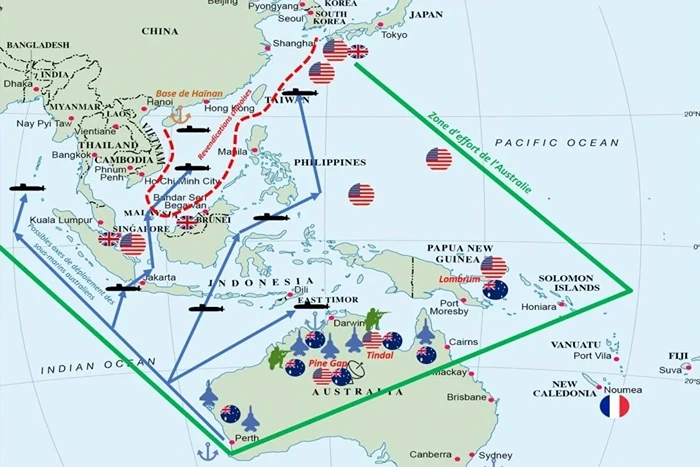
The AUKUS agreement has significant implications for the global balance of power, particularly in the Indo-Pacific region, which has emerged as a key strategic battleground in recent years. The agreement involves the sharing of highly advanced military technology, including nuclear-powered submarines, between the United States, Australia, and the United Kingdom. This could potentially alter the balance of power in the region and increase tensions with China, which has already expressed its strong opposition to the deal.
1. Military and technological capabilities
The AUKUS agreement will significantly enhance the military and technological capabilities of the United States, Australia, and the United Kingdom. The submarines that will be built under the agreement will be highly advanced and will give these countries a significant strategic advantage in the Indo-Pacific region. The submarines will be able to operate for longer periods and at greater distances than conventional submarines, allowing these countries to project their military power further and more effectively.
2. Regional security implications
The AUKUS agreement reflects the growing importance of regional security issues, particularly in the Indo-Pacific, and the need for countries to work together to address shared security challenges. The agreement also sends a strong signal to China that the United States, Australia, and the United Kingdom are committed to upholding a rules-based international order in the region. However, the agreement could also increase tensions with China and other regional powers, who may see it as a provocative move aimed at containing China's rise.
Source: FMES
3. Broader implications for the global balance of power
The AUKUS agreement has broader implications for the global balance of power, as it represents a shift towards a more multilateral approach to security and defense. The agreement is a significant departure from the traditional bilateral security arrangements that have defined the post-World War II security architecture in the region. The agreement reflects a growing recognition that no single country can address the complex security challenges facing the region on its own, and that cooperation between like-minded countries is necessary to maintain stability and security.
4. Response from other countries
Source: The Diplomat
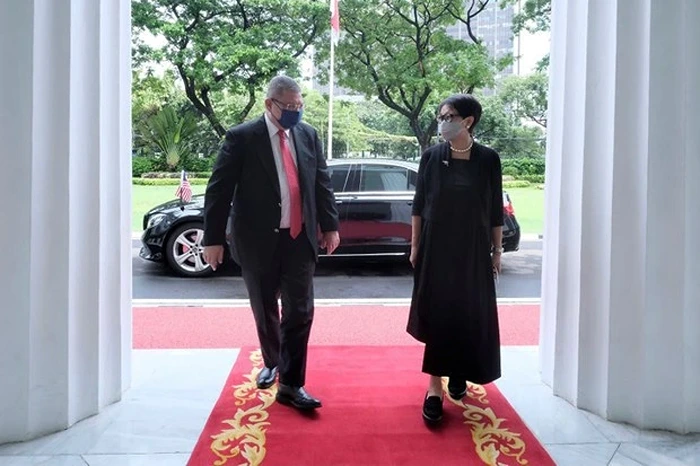
The response from other countries in the region to the AUKUS agreement has been mixed. Japan, which is a close ally of the United States, has welcomed the agreement, seeing it as a positive development that will contribute to regional stability. However, some Southeast Asian countries, such as Indonesia and Malaysia, have expressed concern that the agreement could further increase tensions in the region and destabilize the balance of power. China has strongly opposed the agreement, accusing the United States and its allies of seeking to contain its rise.
Conclusion
In conclusion, the AUKUS agreement is a significant development in the evolving global balance of power. As we have seen, the agreement has important implications for regional security, as well as for the broader geopolitical landscape. The agreement represents a shift towards a more multilateral approach to security and defense, with three major powers coming together to address shared security challenges.
At the same time, the agreement could also increase tensions with China and other regional powers, who may see it as a provocative move aimed at containing China's rise. It is therefore important for the United States, Australia, and the United Kingdom to engage with other regional powers and ensure that the agreement is implemented in a way that does not escalate tensions or undermine regional stability.
Looking ahead, the AUKUS agreement is likely to continue to have significant implications for the global balance of power. As the United States, Australia, and the United Kingdom deepen their security cooperation, other regional powers may feel compelled to do the same, potentially leading to the emergence of new security alliances and alignments.
References
- BBC News (2021). AUKUS: China accuses US and Japan of 'creating chaos' in Asia. https://www.bbc.com/news/world-asia-58540808
- Department of Defense. (2021, September 15). Joint statement on trilateral Australia-UK-US security partnership. https://www.defense.gov/Newsroom/Releases/Release/Article/2767724/joint-statement-on-trilateral-australia-uk-us-security-partnership/
- FMES (2021). The AUKUS Security Pact: Aligning Australia's strategy with America's geopolitical vision? https://fmes-france.org/the-aukus-security-pact-aligning-australias-strategy-with-americas-geopolitical-vision/
- Gartzke, E. (2021, September 20). The AUKUS pact and the new dynamics of global power. Forbes. https://www.forbes.com/sites/erikgartzke/2021/09/20/the-aukus-pact-and-the-new-dynamics-of-global-power/?sh=3c308f0b79c7
- Jennings, P. (2021). AUKUS, security and the Indo-Pacific. Australian Strategic Policy Institute. https://www.aspi.org.au/report/aukus-security-and-indo-pacific
- Ministry of Defence. (2021, September 23). AUKUS: UK, US, and Australia announce landmark defence and security partnership. https://www.gov.uk/government/news/aukus-uk-us-and-australia-announce-landmark-defence-and-security-partnership
- Samuels, R. (2021). The AUKUS agreement and its implications. Council on Foreign Relations. https://www.cfr.org/in-brief/aukus-agreement-and-its-implications
- Strategic News Global. (2021, October 5). AUKUS and India: Shaping a new global balance of power. https://strategicnewsglobal.com/aukus-and-india-shaping-a-new-global-balance-of-power/
- Thakur, R. (2021). AUKUS: A defining moment in the Indo-Pacific? East Asia Forum. https://www.eastasiaforum.org/2021/09/19/aukus-a-defining-moment-in-the-indo-pacific/
- The Diplomat (2021). Indonesia and Malaysia Reiterate Concerns About AUKUS Pact. https://thediplomat.com/2021/10/indonesia-and-malaysia-reiterate-concerns-about-aukus-pact/



